



Table of Contents
If you only have one week in Morocco, you might wonder if visiting the mountains is worth your time. Is it really a good idea to leave Marrakech for a day or two just to explore the Atlas Mountains not too far away?
It’s absolutely worth it, but only if you know what you’re going for.
A High Atlas Mountains trip isn’t one fixed experience. It can mean a lunch stop in a Berber village an hour from your riad, or it can mean five days on a mule track heading towards a 4,167-meter summit. You have to get the version that matches your time and your legs, and best believe you’ll be glad you did.
What Exactly Is the High Atlas?
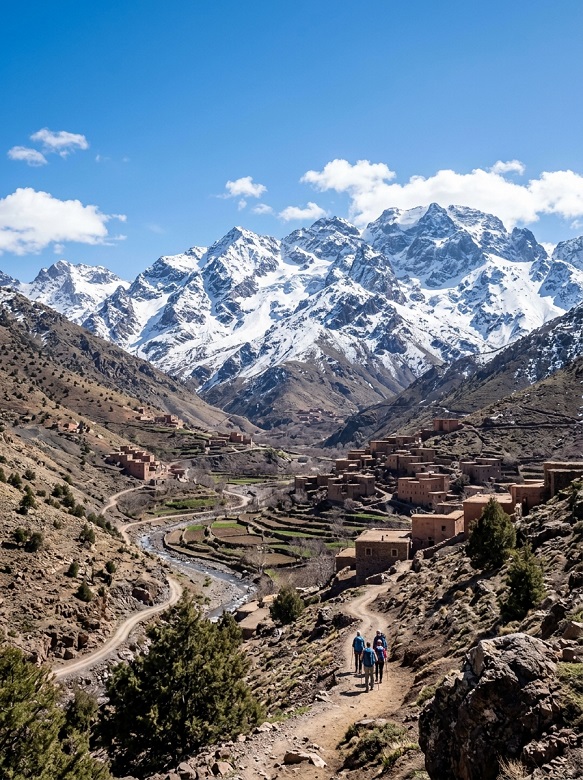
Marrakech sits closer to a mountain range than almost any other major city in North Africa. Look south from a rooftop on a clear morning and you’ll see the Atlas Mountains, snow-capped for half the year.

The Atlas Mountains stretch across Morocco, Algeria, and Tunisia, but the High Atlas is the tallest, wildest stretch of the whole system. It holds Mount Toubkal, North Africa’s highest peak at 4,167 meters. Snow sits above 3,000 meters well into spring.
Africa’s highest ski resort is found in this range too, and most first-time visitors have no idea it exists.
The High Atlas Mountains is not a single attraction; it is a huge mountainous region containing:
- Villages
- Valleys
- Hiking routes
- Agricultural communities
- National park landscapes
- High mountain passes
- Cultural sites
- Trekking routes
- Mount Toubkal
- Oukaïmeden
- Different Amazigh communities
Is Visiting the High Atlas Mountains Worth It?
For most international visitors to Morocco, yes. However, it is particularly worth it if you:
- Love dramatic landscapes
- Enjoy hiking
- Want to experience rural Morocco
- Are interested in Amazigh culture
- Want a break from cities
- Enjoy photography
- Like slower travel
- Want something more immersive than a conventional sightseeing tour
It might not be worth it if you:
- Have only one or two days in Morocco
- Dislike winding mountain roads
- Aren’t interested in nature or hiking
- Expect luxury-resort infrastructure everywhere (there’s only a handful here)
- Have mobility limitations that make mountain terrain difficult
- Want Morocco primarily for its architecture, food, and urban culture
Attractions at the High Atlas Mountains
Toubkal National Park centers the whole region. It winds around the summit and holds most of the trekking routes, plus the villages that support them. Imlil is at its edge as the main entry point.
The Ourika Valley at the foothills of the High Atlas is a popular escape, a river-carved valley lined with argan and walnut trees, small cafés perched over the water, and the Berber village of Setti Fatma at the top with striking waterfalls.
Ouirgane, closer to the Tizi n’Test road, is a quieter valley with a lake and fewer buses.
Asni holds a Saturday souk that still runs the way it has for decades, with livestock, spices, and mountain produce changing hands sometimes even before the tourist vans even arrive.
Oukaïmeden is popular for combining a ski station with one of the largest open-air collections of prehistoric rock art in North Africa.
Tin Mal, an almost-abandoned 12th-century mosque near the Tizi n’Test pass, sits in habitual silence most days. Further out, the Ait Bougamez valley and the Yagour plateau refresh travelers who want fewer crowds and more space.
Things to Do at the High Atlas Mountains
Hiking is the obvious one, and it ranges from an hour’s stroll to a week-long trek. Mule-supported trekking lets you cover real distance without carrying your own gear, and it also keeps local muleteers in work.
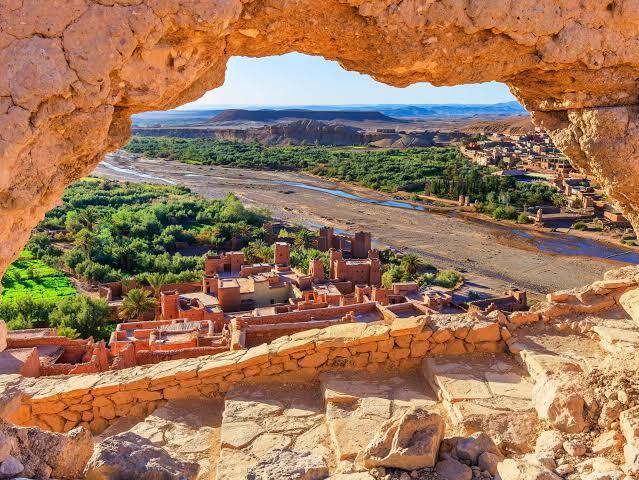
Village walks bring you past working farms, mosques, and mud-brick houses stacked up hillsides.
Tea with a Berber family is offered constantly, and it’s worth accepting.
Oukaïmeden runs actual ski lifts, and it’s totally worth trying. Early risers will take good shots, since the light on the peaks at sunrise beats anything you’ll get midday.
Mountain biking, birdwatching, rock art viewing, and cooking a tagine with a mountain family are all realistic add-ons depending on your operator. Camping under a sky with no city glow is its own reason to stay overnight.
Need a Nifty Itinerary Planner? Use TripMe Now
Do I Need to Climb Toubkal to Experience the Atlas?
Absolutely not.
Some tourists read “High Atlas Mountains” and picture ice axes and five-day permits. The truth is, most visitors never go near a summit.
Here’s a three-level High Atlas adventure to choose from:
Level 1: Scenic Atlas Experience
Little hiking required. You drive through valleys, stop at viewpoints, walk short flat stretches, and eat lunch with a mountain view. This suits almost anyone.
Level 2: Day Hiking
You walk through valleys and villages with a guide, usually two to five hours on foot, gaining and losing a few hundred meters. Reasonable fitness is enough.
Level 3: Toubkal Trekking
A genuine mountain adventure requiring considerably more physical preparation, usually two to four days, an overnight at altitude, and a guide by law inside the national park.
Go ahead and make your choice.
What Is an Atlas Mountains Day Trip from Marrakech Actually Like?
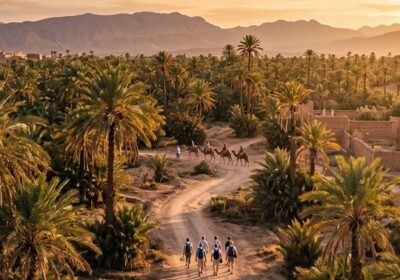
Most day trips leave Marrakech between 8 and 9 in the morning. Within an hour, you’re already climbing out of the flat Haouz plain and into the foothills. The Ourika route takes you along the river valley to Setti Fatma, with stops at argan oil cooperatives and roadside viewpoints along the way.

The Imlil route pushes further into the Toubkal foothills, passing through Asni, and gives you a short valley walk near the mountain proper.
Lunch is almost always a tagine, eaten somewhere with a view worth the price. Afternoon usually means a short waterfall walk or a village visit before the drive back, landing you in Marrakech by early evening, tired in a good way.
Is a day enough?
Enough to see the mountains? Yes.
Enough to understand the High Atlas? No.
Day Trip vs Overnight Stay: Which Is Better?
Day Trip
Pros: Convenient, cheaper, ideal for first-time visitors, works well with short Morocco itineraries.
Cons: Rushed, limited cultural immersion, less time for hiking, a significant portion of the day spent travelling.
Overnight or Multi-day
Pros: Slower pace, better mountain experience, more hiking, village stays, sunrise and sunset experiences, a stronger connection with the landscape.
Cons: Requires more planning, more physical effort, fewer comforts, more time away from Marrakech.
If you have the time, one night in the High Atlas Mountains can transform the experience.
Imlil — the Operational Heart of Mountain Tourism in Morocco
Imlil is the operational heart of mountain tourism in Morocco, sitting at roughly 1,740 meters, about 90 minutes from Marrakech by road. Almost every serious Toubkal attempt begins here, because it marks the end of the tarmac road and the start of the trail network.
The Marrakech travel guide identifies the village of Imlil as the main starting point for exploring the high mountains around Mount Toubkal. Because it sits directly between Mount Toubkal and Oukaïmeden, Imlil is conveniently located right in the middle of two of the area’s most popular places to visit.
Licensed guides, mule handlers, and cooks are based here, and the national park requires a guide for the Toubkal route anyway, so this is where you arrange one.
Accommodation ranges from simple family guesthouses to the well-known Kasbah du Toubkal on the hillside above the village.
From Imlil, you can walk to the neighboring village of Aroumd, continue towards the shrine of Sidi Chamharouch two hours up the valley, or use it purely as a base for gentle valley walks with zero summit ambitions. The surrounding Mizane and Azzaden valleys hold enough side trails to fill several days without ever touching Toubkal’s slopes.
Oukaïmeden: the High Atlas Experience You Shouldn’t Overlook
Oukaïmeden sits between roughly 2,600 and 3,200 meters, and a local ecological tourism initiative promotes its trails, biodiversity, ecomuseum, and cultural heritage. It snows here. You’ll find shepherds bringing their flocks up to graze the high pastures each summer under a centuries-old grazing system that regulates when the land opens and closes.
The bigger surprise for most visitors is the rock art. Oukaïmeden holds hundreds of Bronze Age engravings scattered across the valley floor, some depicting daggers, shields, and human figures carved thousands of years ago. The Moroccan tourism office highlights the site’s hiking routes alongside this rock-art heritage.
Yes, Morocco has a ski resort, and it’s in Oukaïmeden. It runs from roughly late December through March, with basic lifts and a short season. Some find it more fun than world-class skiing, and is genuinely unexpected for a country most people associate with heat and desert.
Need a Powerful Trip Planner? Use TripMe Now
Best Time to Visit the High Atlas (Seasons)
Spring — April through May brings wildflowers, running rivers, and comfortable hiking temperatures. It’s the strongest all-round season for a High Atlas mountains trip.
Summer works well as an escape from Marrakech’s heat once you’re above 1,500 meters, though lower valleys still remain warm.
Autumn — September through October brings apple harvest season around Imlil, clear skies, and cooler air, and it’s a quiet favorite among guides.
Winter turns the upper peaks white and opens the Oukaïmeden ski season, but hiking Toubkal at this time demands crampons, an ice axe, and real winter mountaineering experience. A scenic drive or lower-altitude valley walk still works fine in winter for most visitors.
Where to Stay
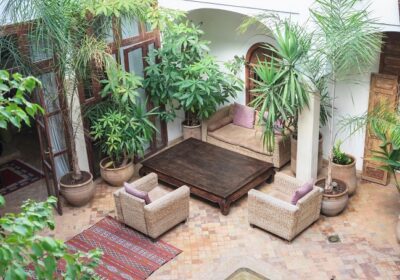
At the simplest end, mountain gites and Berber family guesthouses in Imlil, Aroumd, or the Ourika villages cost little and put you directly inside local life, often sharing meals with the family that runs the place. Mid-range guesthouses and small riads scattered through Imlil and Ouirgane add private bathrooms and hot water without losing the mountain feel.
Trekkers heading towards the summit typically spend the night at the CAF refuge near the base of Toubkal. It’s a functional mountain hut and not a hotel. At the top end, Kasbah Tamadot near Asni offers a genuine luxury resort experience with mountain views and full service, and Kasbah du Toubkal above Imlil blends comfort with proximity to the trailhead.
Choose based on how close you want to be to the trail versus how much comfort you want at the end of the day.
The 2023 Earthquake
The September 8, 2023 Al Haouz earthquake severely affected parts of the High Atlas, particularly remote communities close to the epicenter near Oukaïmeden. Villages lost homes, schools, and roads, and rebuilding in terrain this steep and remote was never going to be quick.
Reconstruction is still an ongoing process. In June 2026, the European Investment Bank released a second tranche of €500 million, bringing its total commitment to €1 billion for reconstruction across the affected High Atlas areas, covering roads, schools, and healthcare infrastructure, delivered through Morocco’s High Atlas Development Agency. The program is set to run through 2030.
This isn’t a reason to stay away. In fact, it’s even more of a reason to visit—to have fun and also empathize with the people.
How Tourism Can Actually Help the High Atlas
Guides, muleteers, cooks, and guesthouse owners in this region depend on visitors directly, and post-earthquake this matters more than usual. Booking a licensed local guide instead of an unregulated cheap alternative puts money into trained community members rather than middlemen.
Staying overnight in a village guesthouse instead of only day-tripping through helps the people who actually live here.
Buying crafts, produce, or a meal directly from a family rather than a Marrakech souvenir shop keeps that income local. None of this requires over-the-top gestures. Simple, ordinary tourist choices can add up across a whole season.
What Tourists Get Wrong About the Atlas Mountains
Myth 1: “I need to be an experienced climber.” No. Most visitors never leave the Level 1 or 2 territory.
Myth 2: “Toubkal is the only reason to go.” Definitely not. Villages, valleys, and rock art at Oukaïmeden stand on their own.
Myth 3: “The mountains are just a quick photo stop.” Not if you plan properly. A single overnight changes the whole feel of the trip.
Myth 4: “The weather will be the same as Marrakech.” No. Expect it to be noticeably cooler and genuinely cold at altitude outside summer.
Myth 5: “A day trip lets me experience the whole Atlas.” It gives you a taste, and a good one, but not the full picture.
Myth 6: “Authentic means uncomfortable.” Not necessarily. The luxury Kasbah du Toubkal and Kasbah Tamadot sit in the same mountains as the family gites.
Myth 7: “The earthquake means tourists shouldn’t visit.” Absolutely not. Tourist visits support the recovery rather than hinder it.
Planning Your High Atlas Mountains Trip: How Many Days Should You Spend?
One day gets you a taste, the classic Ourika or Imlil Valley experience. Two to three days lets you combine a day hike with one overnight in a village, which most guides consider the sweet spot for a first High Atlas Mountains trip. Four to seven days opens up a proper Toubkal summit attempt, or a slower multi-village trek through valleys like Azzaden or Ait Bougamez.
What Should Tourists Pack?
Sturdy walking shoes beat sandals on rocky mule tracks. Bring sun protection even in cooler months, since altitude sun burns fast. Carry more water than feels necessary, and keep small dirham notes on hand for tea stops and village purchases.
Anyone attempting Toubkal in winter needs crampons and an ice axe, arranged through a licensed guide.
How to Choose the Right Atlas Tour
Pick an operator based on ratings and reviews from real past guests rather than the lowest price on offer. A cheap tour with an unlicensed guide, an overloaded van, or no proper insurance isn’t a bargain if something goes wrong on a mountain trail.
Look for operators and aggregators who list licensed guides by name, describe the actual route in detail, and have a consistent pattern of recent, specific reviews rather than a handful of vague five-star ratings.
Make that Plan
A High Atlas Mountains trip rewards the traveler who plans it with intention. Pick your level, pick your pace, and pick an overnight if your schedule allows it. The mountains will always be there to welcome you, snow-capped and quiet.
You May Also Like:
Why Morocco is the Most Visited Country in Africa
Why Millions of Tourists Visit Marrakech Morocco Every Year