


Table of Contents
Millions of Black people have taken a DNA test and gotten a result that points to Nigeria. For many African Americans, Afro-Caribbeans, and Afro-Europeans, that result raises a bigger question: what comes next?
This guide covers the emotional places to visit in Nigeria to help you reconnect with your African roots. These sites are tied to the transatlantic slave trade, to resistance, and to the ethnic groups most connected to diaspora communities across the Americas and the Caribbean.
There are five stops you should make in your itinerary: Lagos State, Akwa Ibom State, Cross River State, and Edo State: Badagry, Ikot Abasi, Uyo, Calabar, and Benin City.
Where Did My Ancestors Come From?
DNA testing has made it possible to trace ancestry to specific parts of Africa, including Nigeria. AncestryDNA, 23andMe, and MyHeritage built large databases that compare your DNA against samples from West and Central Africa. African Ancestry, a Black-owned company founded by Dr. Rick Kittles and Gina Paige, traces a direct maternal or paternal line to a specific country and ethnic group. Living DNA offers more detail on African sub-regions, useful if you already suspect Nigerian ancestry and want more guidance. Each platform has a different reputation among users.
For example, AncestryDNA gets credit for the size of its database and the speed of its results.
African Ancestry is known for specificity, even with a smaller sample pool.
MyHeritage is known for affordable pricing and strong record-matching tools.
Results can vary across platforms because each platform uses a different reference panel.
A result like “27% Nigerian” gives you a starting point. What it doesn’t do is tell you what it feels like to stand in a place connected to that ancestry. To experience the food and feel the culture. A trip down memory lane closes that gap in a way a DNA report can’t.
A DNA test can tell you where your ancestors may have come from. But a journey to Nigeria can help you understand what that heritage feels like.
The Peoples Behind the Diaspora Story
Most diaspora DNA results connect to a handful of ethnic groups from Nigeria’s coast and interior. Yoruba culture has a strong presence in Brazil, Cuba, and Trinidad, carried through language, food, spiritual traditions such as Candomblé and Santería, and annual festivals.
Igbo people entered the transatlantic trade in large numbers. Historians trace direct connections between Igbo captives and communities in the Americas, including the Gullah Geechee corridor in the southeastern United States. Family and identity remain central to Igbo culture today.
Efik and Ibibio communities lived along the coast in what’s now southeastern Nigeria, directly on Atlantic trade routes. Old Calabar and Ikot Abasi were major ports in that trade for centuries, which is why the region holds several heritage sites today.
The Edo, or Bini, people built the Benin Kingdom, known for advanced bronze and ivory craftsmanship. Much of that work now sits in museums outside Nigeria, a fact at the center of an ongoing repatriation debate.
Badagry, Lagos State: Where Most Returnees Start
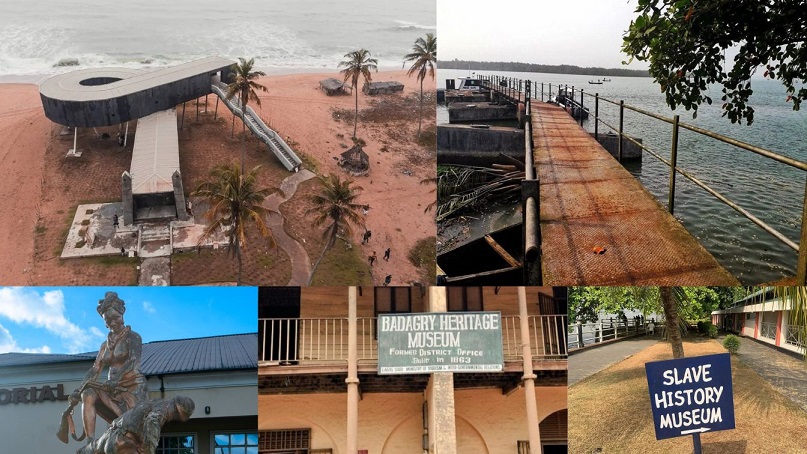
Badagry is about an hour outside Lagos by road. It was one of the busiest points on the transatlantic slave trade route, and several sites there still document that history. The Badagry Heritage Museum holds chains, branding irons, and trade ledgers from that period.
The Point of No Return marks the spot where captives boarded boats before being taken to ships bound for the Americas and the Caribbean. Many visitors describe it as the hardest stop on the trip.

Other sites in Badagry include:-
- Mobee Family House and Relics Museum. A rich, historical property run by descendants of a family connected to the trade.
- Seriki Williams Abass Slave Museum. This was the former home and barracoon of a man who was enslaved and later became a slave trader.
- Velekete Slave Market. This was once an active auction site. Captured slaves were auctioned at this market to the highest bidder before they were shipped overseas. Emotional monuments now remain at the protected site.
- The Spirit Attenuation Well. This was where captives were made to drink water believed to erase their memory before the journey
One visitor from Houston broke down in tears during her trip to Badagry. She said the whole experience felt so personal, far different from something from a textbook.
A short boat ride connects the mainland to Gberefu Island, where the Point of No Return and the well are located. Most guided tours cover the full route in one day.
Whispering Palms Resort, just outside town, is a common base if you’d rather split the visit over two days.
Read: Complete Guide to Badagry and What It Means for Diaspora Returnees
Ikot Abasi, Akwa Ibom State
Ikot Abasi is located in Akwa Ibom State, in Nigeria’s Niger Delta region. It was once part of the Opobo Kingdom, ruled by King Jaja, who rose from enslavement to build a major trading power on the West African coast in the 1800s. He blocked British merchants from trading directly with inland producers and built his wealth on palm oil. In 1887, the British lured him onto a warship under pretenses and deported him to the Caribbean. He died on the journey home and never saw Opobo again.
The Bridge of No Return is arguably the most poignant destination in your heritage travel to Ikot Abasi in Akwa Ibom State.
The Bridge of No Return was first built in 1705 for the purpose of conveying slaves into waiting ships. It is a floating jetty and has three major underground holding compartments, which were used in storing hot-headed captives. The compartments have a capacity for about 30 people, but about 150 slaves were stored there at any given time.
It was nicknamed the “Bridge of No Return” because once a captive stepped on it, they weren’t allowed to look back, and they never returned.
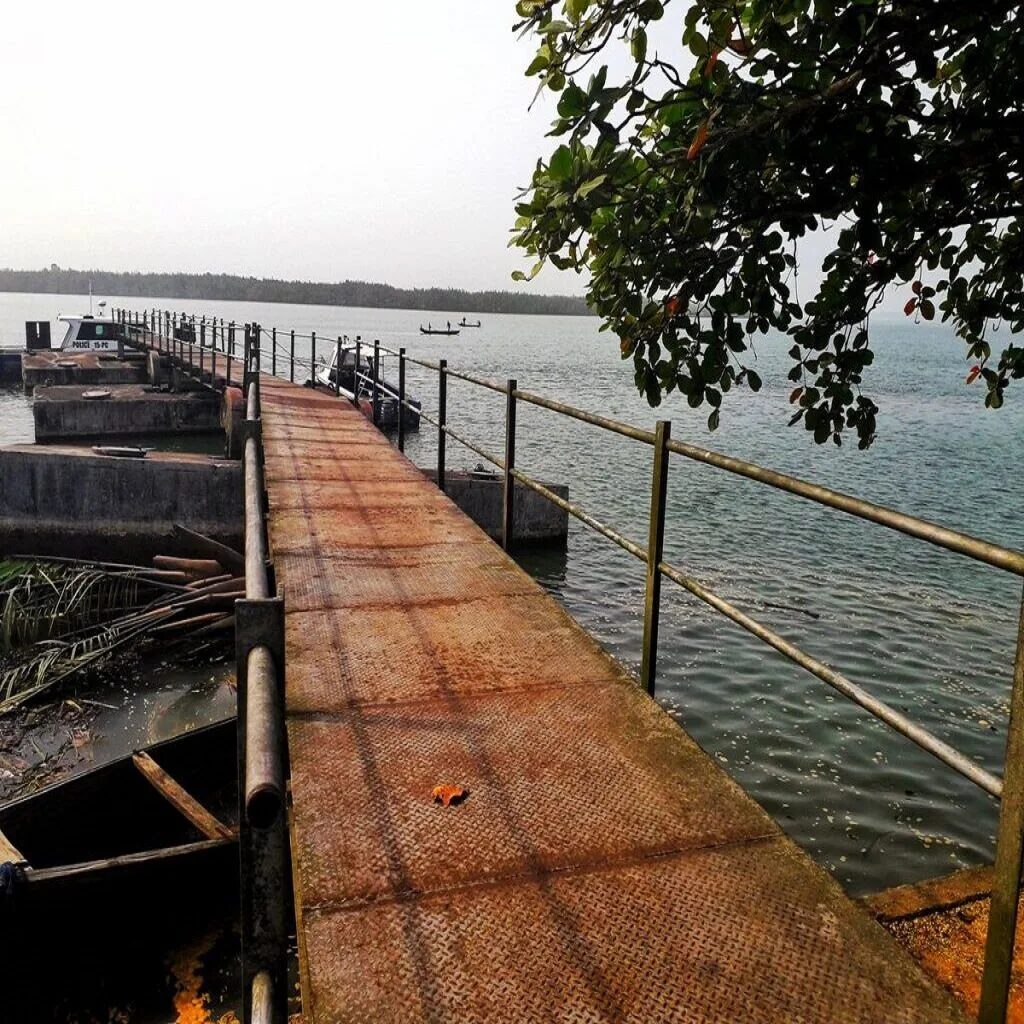
Today you can visit the Bridge of No Return, walk on this bridge, soak up memories, reflect and reconnect, and return.
The old Slave Warehouse nearby once held people before sale, and parts of the structure are still standing. It once served as a holding place where captured individuals were kept before being sold to traders. There were waiting cells and underground storage facilities.
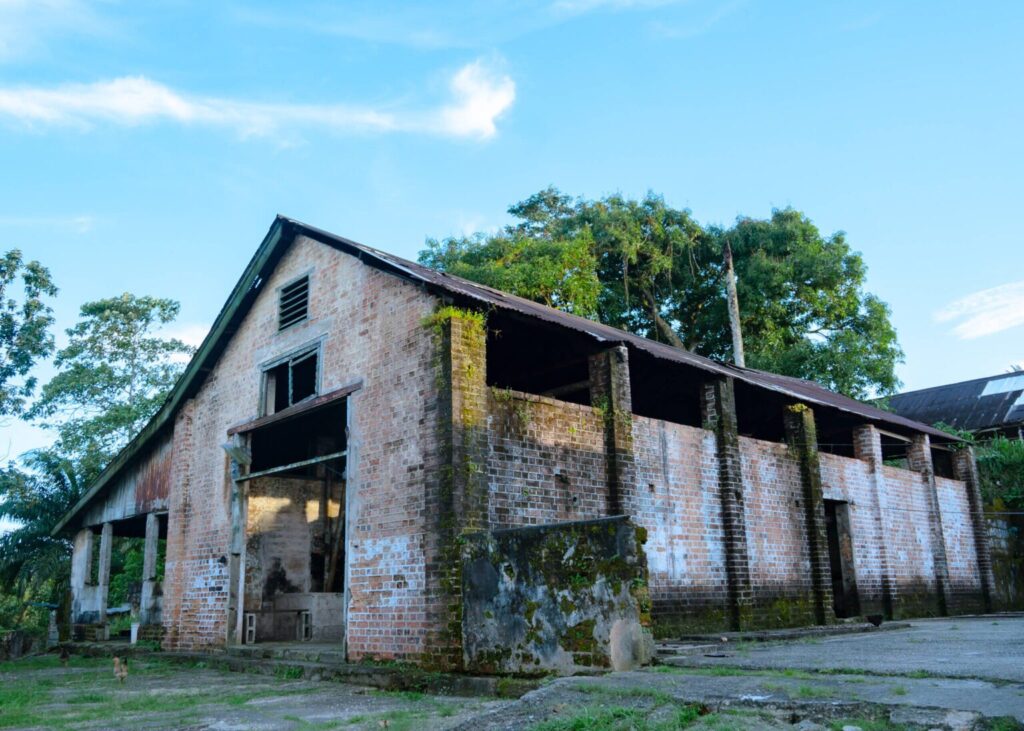
The building’s presence symbolizes a difficult chapter in history and offers a unique, reflective experience for visitors.
The 1929 Women’s War Memorial marks a different event. That year, women across the region organized protests against colonial taxation and abuse, one of the earliest organized acts of resistance to British rule in the area. It all started in Ikot Abasi before spreading to other eastern cities, like Aba. The riot turned violent. Some women and soldiers died. There are monuments and mock graves in honor of the women who died.
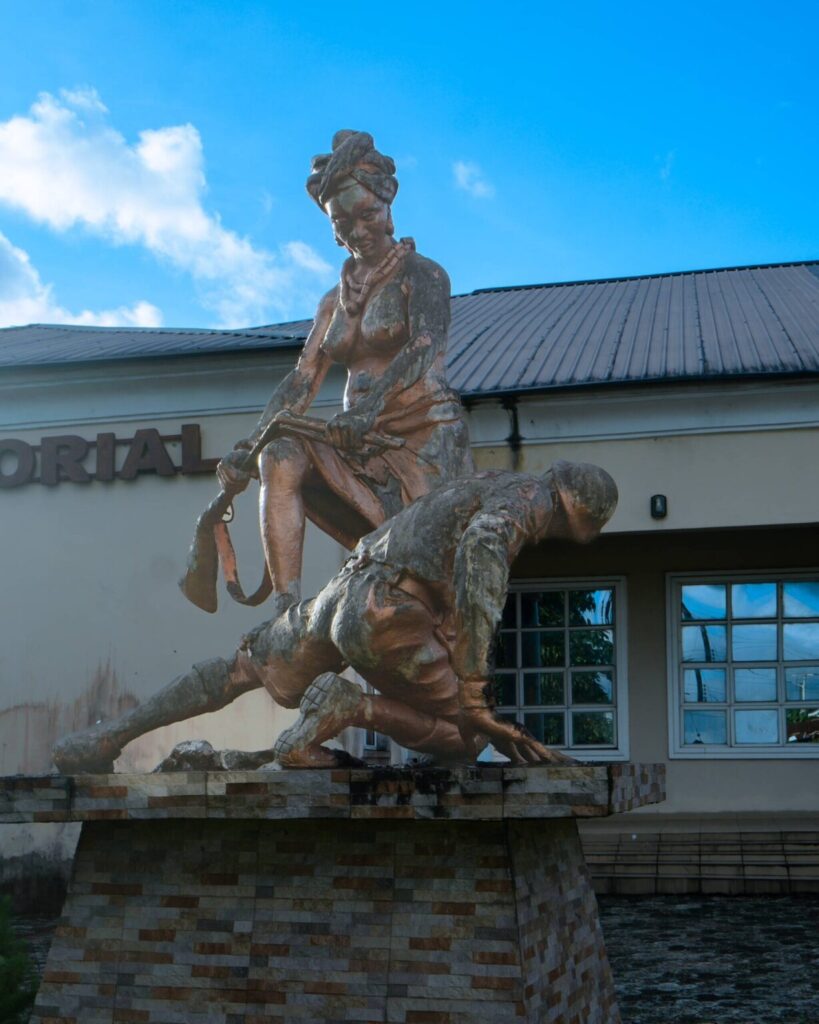
The site is a testament to Black women’s resistance to oppression and slavery.
Uyo, Akwa Ibom State: A 179-Year-Old Boat
Uyo is home to the Slave Memorial Park, where you will find a 179-year-old slave trade boat at Marina Beach, inside the grounds of the Ibom Icon Hotel & Golf Resort in the Nwaniba coastal community, Uruan Local Government Area.
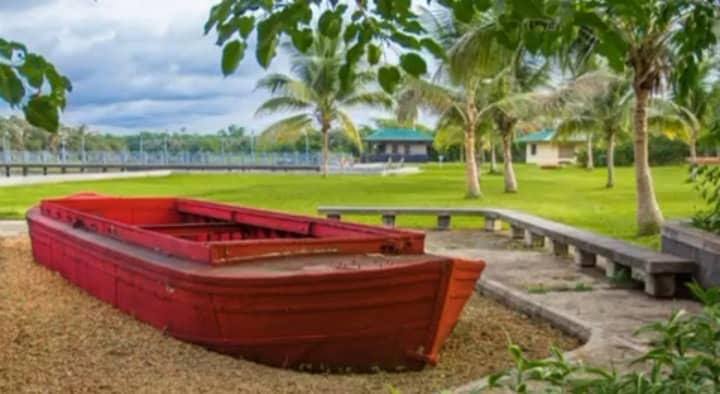
Hundreds of people were packed into vessels this size for journeys that lasted weeks. This particular one was seized by the locals, and it has remained a heritage attraction for many years now.
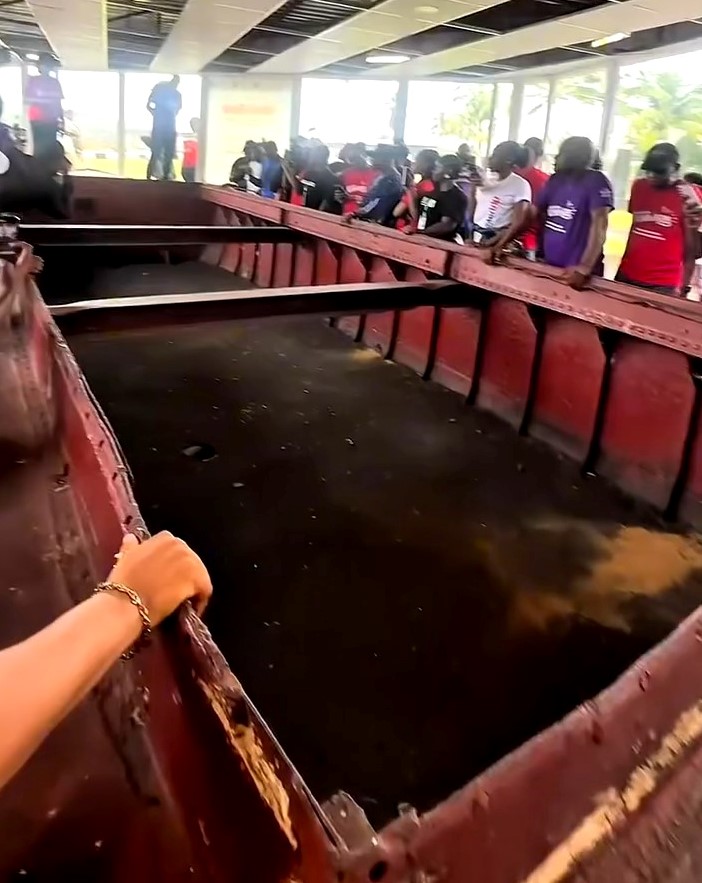
Uyo works well as a stop between Ikot Abasi and Calabar, about two hours up the coast. Many visitors stay overnight at the Ibom Icon Hotel & Golf Resort before continuing the trip – a luxury 5-star resort hotel in the heart of Uyo with a golf course.
Calabar, Cross River State: Old Calabar’s Long Memory
Calabar is about two hours from Uyo. Old Calabar was a major port in the Atlantic slave trade for centuries, and the city has built several sites around that history.
The Slave Trade Museum at Marina Resort documents the transatlantic trade through photographs, videos, carvings, sculptures, written records, and artifacts.
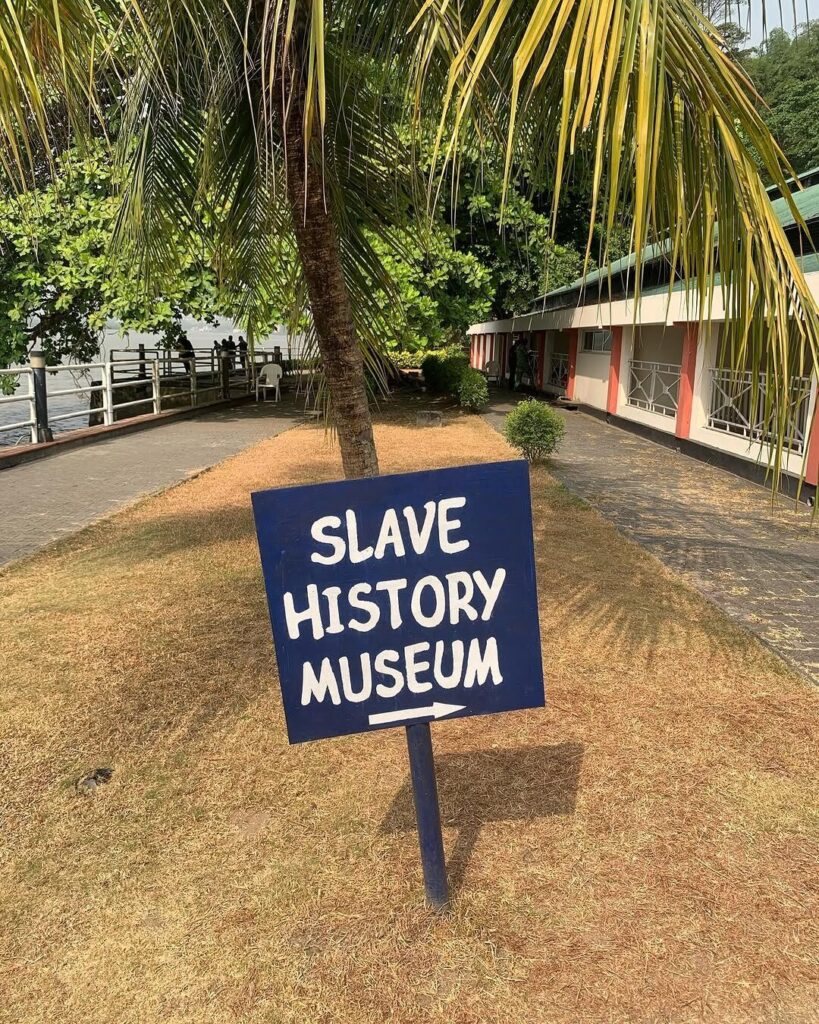
Many visitors consider it the most complete single stop on the trip.
An old slave port still stands at Marina Beach, now used mainly by local fishermen and sea travelers.
The Calabar National Museum, also known as the Old Residency Museum, covers the slave trade era and the colonial period that followed it.

Benin City, Edo State: The Kingdom Behind the Benin Bronzes and Carved Ivory
The Benin Kingdom resisted the slave trade for most of its history, then participated in it during its decline. Many Black diaspora DNA results trace back to this kingdom, which once covered much of what’s now southern Nigeria. The main historical site is the Benin City National Museum, which holds manillas and ivory carvings that survived the kingdom’s history.
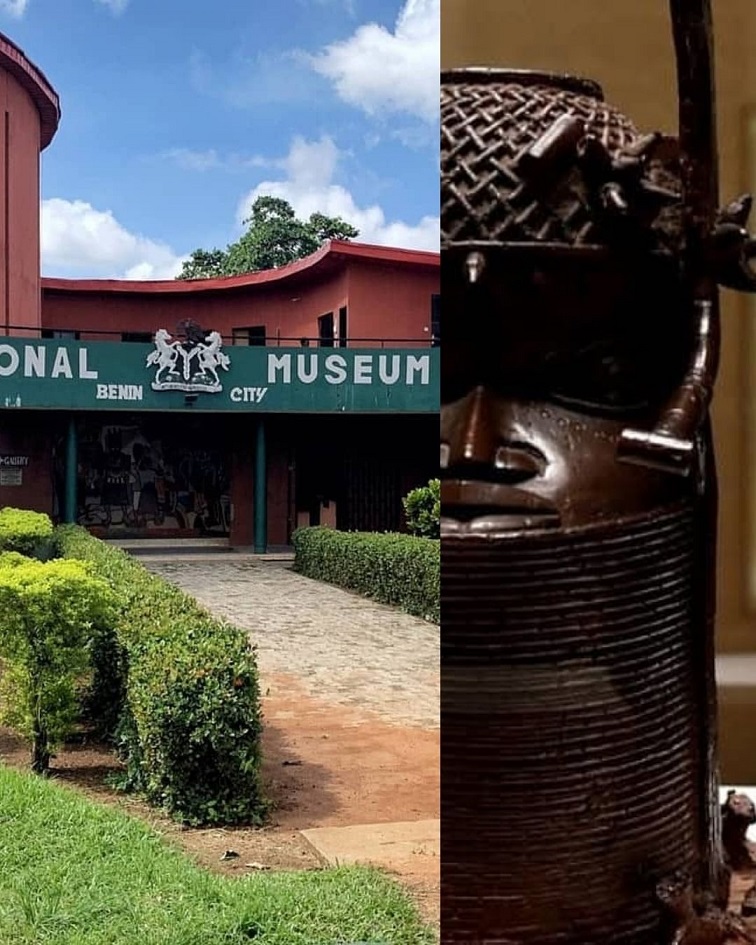
In 1897, British forces looted thousands of artifacts during the Punitive Expedition, sending Benin bronzes and ivory to museums in London, Berlin, and elsewhere. Since 2021, Germany, the Netherlands, the Smithsonian, and Cambridge University have returned pieces to Nigeria, and more than a hundred are now on display at the Benin City museum. Most remain abroad. A new facility, the Edo Museum of West African Art, is under construction in Benin City to eventually house the rest.
The museum can also direct visitors to the Igbesanmwan guild, the carvers responsible for Benin’s ivory masks and ceremonial pieces. Guild members still use techniques passed down from the kingdom’s glory days.
Planning the Route
These are the top five places to visit in Nigeria to reconnect with your African roots. Most trips start in Lagos, since Murtala Muhammed International Airport handles the bulk of flights into the country. Badagry is roughly an hour to an hour and a half by road, depending on traffic.
The Akwa Ibom and Cross River routes are best traveled by air from Lagos. Ibom Air is your best bet from the Lagos airport. The Akwa Ibom State government owns it and has been voted the best airline in Nigeria for four consecutive years. The carrier flies into the Victor Attah International Airport in Uyo, and from there, Ikot Abasi and Calabar are both within a two- to three-hour drive.
You can either travel by road to Calabar from Uyo or fly into the Margaret Ekpo International Airport in Calabar using Ibom Air from Akwa Ibom’s international airport.
These days, you can take a direct flight from Ghana to the Victor Attah International Airport in Uyo without having to stop over in Lagos or Abuja.
Benin City should close your tour if you follow our itinerary. A short domestic flight from Lagos, Uyo, Calabar, or Abuja lands at Benin Airport, close to the museum and the old palace grounds.
A full route, Lagos to Badagry, then Akwa Ibom State and Cross River, then Benin City, takes most travelers seven to ten days. The dry season, November through March, is often preferred by travelers. But honestly, you can visit anytime of year and still have a great experience.
A DNA test gives you a starting point. Visiting these places is where the actual emotional reconnection happens.
We can plan your ancestral reconnection journey to Nigeria—from airport pickup to reservations to heritage sites and other amazing places of interest. Contact Places To Tour.
You May Also Like:
12 Most Livable African Countries for African Americans