



Table of Contents
If you think experiencing Marrakech means simply going to tourist attractions like the Bahia Palace, Jardin Majorelle, and Jemaa el-Fna, you’re only seeing half the city. The other half is happening around you—the food scene: smoky grills, steaming tagines, spice-filled souks, glasses of mint tea, and tiny food stalls tucked into the Medina.
Marrakech’s official tourism guide ranks gastronomy alongside culture, shopping, nightlife, and other experiences, while also highlighting the city’s blend of Berber, Arab, Jewish, and Andalusian culinary influences.
There are so many extraordinary things to do in Marrakech for food lovers, and we’re going to take you through every bit of it.
Things to Do in Marrakech for Food Lovers
1. Take a Food Tour Through the Medina
Start here if you’re new to Moroccan food.
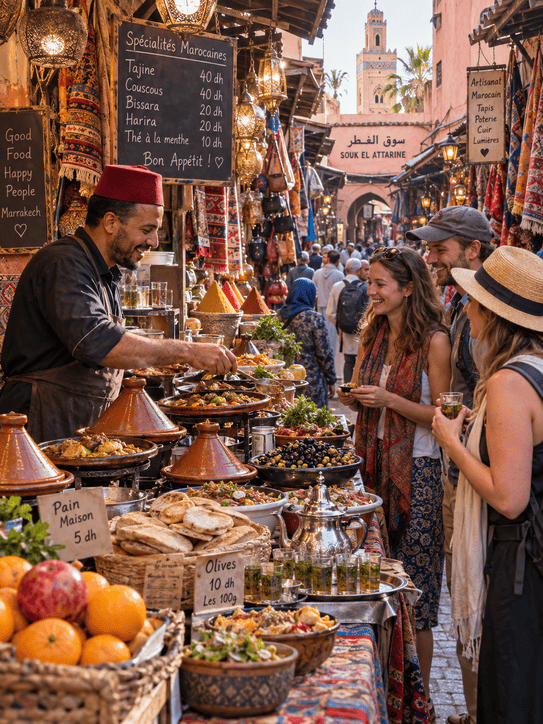
The Medina can feel confusing at first. There are tiny bakeries, fruit sellers, spice merchants, cafés, restaurants, and food stalls tucked between shops selling leather goods, lamps, carpets and ceramics.
A food tour takes you in the right direction.
Current food tours in Marrakech include Medina and Jemaa el-Fna experiences, while the city’s official tourism guide actively promotes street-food tours and culinary experiences for tourists.
The best way to understand Marrakech’s food scene may be to let someone else lead you through it.
A local guide can also take you to amazing places you could have ordinarily passed if you went exploring on your own.
Marrakech Food Tours (Taste Of Marrakech) is one current option based around Jemaa el-Fna. Moroccan Food Adventures is another food-focused operator in the city.
2. Eat at Jemaa el-Fna After Dark
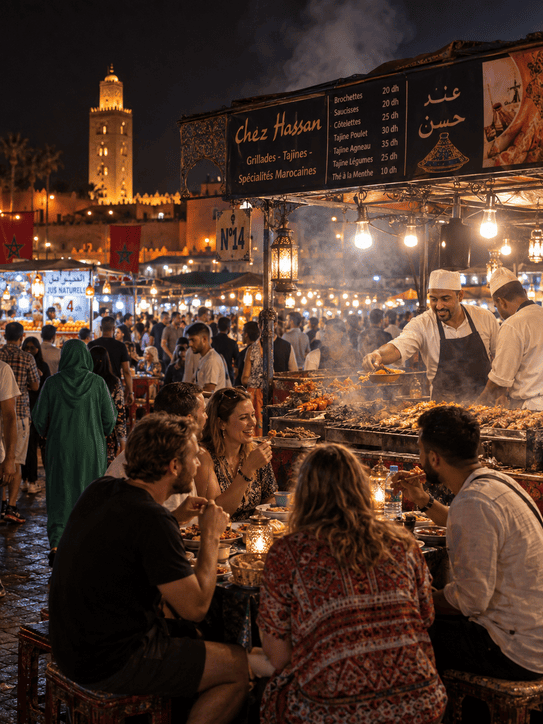
Jemaa el-Fna changes when the sun goes down.
During the day, you can wander through the square, look at the performers and watch the city move around you. By evening, food stalls begin to take over the scene.
You’ll see plumes of smoke rising from grills, meat sizzled over charcoal, and steam escaping from pots of soup. Also, you’ll see baskets of bread sitting beside bowls of salad and piles of spices, fresh juice stalls, and Moroccan sweets.
The Moroccan National Tourist Office describes Jemaa el-Fna as a giant open-air restaurant after dark. Its Marrakech guide also points visitors towards the square for local delicacies, music, storytellers, and other performances.
Enjoy a bowl of harira, try grilled meat, explore Moroccan salads, and finish with something sweet. Wash them down with fresh juice and water.
P.S. Choose food stalls that are busy with customers. If you’re with an experienced food guide, then you’re good.
3. Try Tanjia Marrakchia, the Dish that Belongs to Marrakech

If you are to eat only one dish because you want something closely associated with Marrakech, make it tanjia Marrakchia.
Tagine may have become the international face of Moroccan cuisine, but tanjia gives your trip a distinctly Marrakech flavor.
Traditionally, tanjia Marrakchia is meat such as beef or lamb, packed into a tall clay urn with preserved lemon, garlic, saffron, and ras el hanout, sealed with paper, and left to cook slowly in the dying embers of a hammam furnace for six to eight hours. The result is tender, deeply seasoned meat with a very different feel from the tagines most visitors already know.
No matter what you eat in Marrakech, order tanjia at least once.
4. Have a Proper Moroccan Tagine
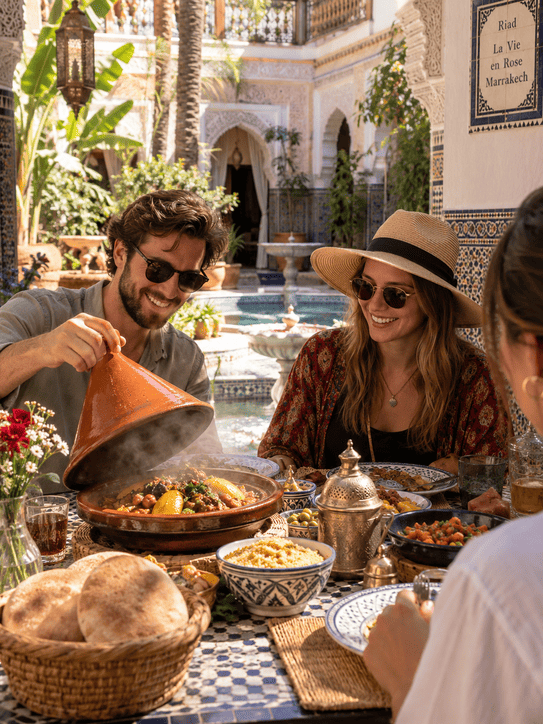
Yes, you’ve probably seen tagine on Moroccan menus before you even arrived in Morocco. You may have eaten a version of it elsewhere, but Marrakech gives you a chance to experience it in its natural setting.
Tagine is a slow-cooked Moroccan dish that combines tender meats, vegetables, fruits, and aromatic spices like ginger, cumin, turmeric, olives, and cinnamon, cooked in an earthenware or ceramic pot also named tagine.
Chicken with preserved lemon and green olives is the classic.
Other combinations also worth trying are:
- Lamb with prunes
- Lamb with vegetables
- Beef or other meat preparations
- Vegetable tagines
- Seasonal combinations built around what’s available
In Morocco, bread also goes with tagine.
Try at least two different versions during your stay, ideally from two different kinds of kitchen.
5. Discover Moroccan Breakfast

Skip the hotel buffet at least one morning and eat the way Marrakech actually eats before noon.
A proper Moroccan breakfast comes in different plates. Expect msemen, a flaky, pan-fried square bread that’s best eaten the moment it comes off the griddle. Baghrir, sometimes called Moroccan pancakes, arrive with tiny holes built to soak up honey. You’ll also see khobz, the everyday round bread, plus olive oil for dipping, local honey, and amlou, a thick paste of ground almonds, argan oil, and honey that some visitors describe as better than peanut butter. Mint tea or strong coffee rounds it out.
Café des Épices, perched above Rahba Kedima square, serves a traditional breakfast plate with fresh bread, an omelet, and your choice of tea or coffee, and it’s become a go-to spot for visitors wanting the real version without having to go to a private kitchen.
Also, riads across the Medina serve their own versions each morning too, often on a rooftop terrace as the city wakes up below you.
6. Drink Mint Tea for the Ritual

You’ve probably heard about Moroccan mint tea before your trip.
Try to experience it. Tea is tied closely to Moroccan hospitality. The Moroccan National Tourist Office describes mint tea as a ceremonial drink used to welcome guests, with the tea traditionally poured from a height into small glasses.
You’ll find it in restaurants, riads, hotel resorts, cafés, and homes.
7. Learn to Cook Moroccan Food
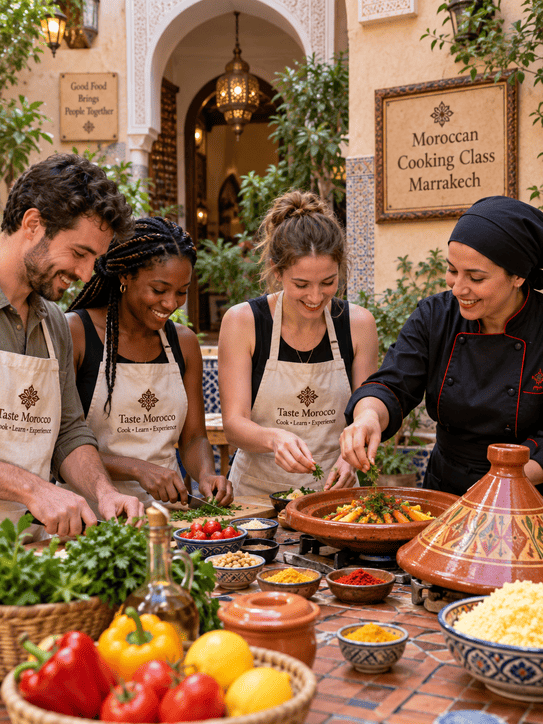
Eating Moroccan food is one thing. Learning to make it gives you a completely different relationship with the dishes.
Cooking classes in Marrakech can take visitors through ingredient selection, spices, vegetables, Moroccan salads, bread, tanjia, and tagine preparation. Some include a trip to a local market before the cooking begins. Attending a cooking class should be a part of your Marrakech itinerary.
Moroccan Culinary Art Museum (MCAM) is one option in the Medina area. La Maison Arabe runs a long-established class with a show kitchen and workstations for each guest, plus two experienced cooks guiding you through the process.
Check out other options.
You can also look at Cooking Class With Moroccan Family if you want a more intimate setting.
Vegetarian, vegan, and gluten-free versions of the same menu are common, and a good host will properly adjust.
8. Visit a Food Market and Shop Like a Local
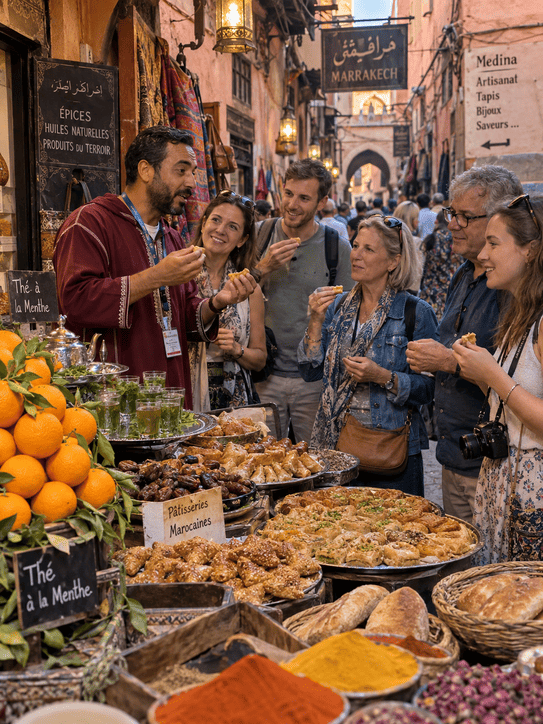
This is one of the most exciting things to do in Marrakech for food lovers.
The souks of Marrakech aren’t only about rugs and lanterns. Some of the best sightseeing in the Medina takes place where food is sold.
Rahba Kedima, also called the Spice Square, mixes food stalls with herbalists selling everything from cumin to dried rose petals, and it’s one of the more atmospheric corners of the whole Medina.
Common things to buy are olives, dates piled into pyramids, dry apricots and figs, bags of almonds and walnuts, jars of preserved lemons, bundles of fresh herbs, and round loaves of bread stacked on wooden carts. You can also go for Moroccan sweets.
Souk Semmarine is one of the best-known market areas in the Medina, but food shopping happens across many parts of Marrakech.
Actually, you don’t need to buy anything to get value from a walk through these markets. But be a jolly good fellow and patronize that vendor smiling at you.
9. Go Hunting for Moroccan Pastries and Sweets

Moroccan pastry culture is a discovery in itself. You can try chebakia, a sesame-coated pastry commonly associated with Moroccan celebrations and Ramadan. Another one is ghriba, crumbly biscuits often made with almonds or semolina. Then you have briouat, small pastry parcels that can be sweet or savoury.
Sellou is a dense mixture built around roasted flour, nuts, sesame, and spices.
And dates; don’t ignore dates.
The fun here comes from trying different things at different intervals.
You May Also Like:
10 Adventure Activities to Do in Palmeraie Marrakech Travelers Love
25 Unusual Things to Do in Marrakech (A Tourist’s Pocket Guide)
10. Explore the World of Moroccan Spices

Spices are one of the easiest ways to understand Moroccan cooking.
Rahba Kedima, sometimes called the Place des Épices, sits at the center of Marrakech’s spice trade. You will find stalls piled with cumin, cinnamon sticks, dried ginger, turmeric, sweet and smoked paprika, and saffron threads sold by the gram.
Nearby, Souk El Attarine carries its own concentration of spice sellers, and you will find smaller, quieter shops in the alleys around the Mouassine fountain favored by locals over tourists.
When you get to a spice shop, ask for “Ras el hanout.” The name translates roughly to “top of the shop,” and it refers to a blend obtained from whatever a merchant considers their finest spices. Sometimes a dozen ingredients, sometimes closer to thirty. No two blends taste exactly alike.
Spices form the base of literally most Moroccan dishes.
11. Find a Rooftop for Lunch or Dinner

Marrakech is a city of rooftops.
The Medina’s high walls can hide the city while you’re walking through its streets. Climb above them and the view changes.
You may see the Koutoubia Mosque. On clear days, the Atlas Mountains can appear beyond the city.
For a meal with a rooftop setting, Restaurant Le Grand Bazar Marrakech is one option in the Medina. Coco Rooftop Restaurant, Dardar Rooftop, Kabana Rooftop, Kosybar, and Nomad are other popular options.
El Fenn is amazing. You can also consider La Pergola in Riad Zitoun Lakdim.
Go around sunset if you can.
The food tastes different when you can see where you are.
12. Take a Day Trip to the Ourika Valley for a Food Experience

The Ourika Valley is just about an hour south in the foothills of the Atlas Mountains. The official Marrakech tourism guide currently promotes a Berber cooking experience there that combines a visit to the Tnine Ourika market with a cooking workshop.
You also get to experience traditional Berber Tagine with Moroccan tea. There are riverside restaurants, built on wooden platforms right over the rushing Ourika River, that serve a wide variety of Moroccan dishes.
You can also stop at a women’s cooperative producing argan oil by hand, using a process passed down through generations of Amazigh families in the region.
The scenery is another reason to go. The valley brings rivers, villages, orchards and mountain landscapes into a trip that initially began as a food excursion.
Your Best Food Experience in Marrakech
Marrakech can certainly give you the polished version of Moroccan dining.
There are elegant riads. Rooftop restaurants. Hotel dining rooms. Cooking schools. Fine-dining menus.
But some of the food you’ll remember most may cost very little.
However, if you can, give yourself room for both luxury and street food.
The twelve experiences above are some of the best things to do in Marrakech for food lovers.
Visit Marrakech. Have fun. Eat good food and be happy.
Also Read:
Top 12 Affordable Riads in Marrakech Under $100
18 Best-Rated Riads in Marrakech Medina with Rooftop Terraces
25 Top Marrakech Hotels and Resorts Travelers Love