



Table of Contents
Marrakech is one city that leaves you in awe, whether it’s your first time or you’re a return visitor. Its old walls, palace courtyards, mosques, ancient gates, and busy squares tell stories from different periods of Moroccan history. If you want to understand the city beyond its souks and riads, start with its cultural landmarks and heritage sites.
The city was founded by the Almoravids in 1070–1072 and later became a capital under the Almohads and Saadians. Each dynasty left something behind. Some of those remains are massive. Others are easy to miss unless you know where to look.
This guide takes you through fifteen of the most important cultural landmarks and historic sites in Marrakech—palaces, tombs, mosques, gates, and the neighborhoods that hold them together. Bring cash in dirhams, dress modestly for the revered sites, and go early.
1. Almoravid Koubba

Location: 75 Derb Souk Cheria, Marrakech Medina, Morocco. Landmark: Directly opposite the Ben Youssef Mosque
Access Fee: Foreign Adults: 100 MAD (~€10). Foreign Children (7–13): 50 MAD (~€5). Children under 7: Free
The Almoravid Koubba dates to around 1120 CE, built under Sultan Ali ibn Yusuf as an ablution pavilion for a mosque that no longer exists. It’s the only intact Almoravid structure left standing in Morocco. French archaeologists uncovered it in 1948, buried three meters below the current street level.
It’s small. You’ll spend, let’s say, fifteen minutes here, maybe twenty if you read every panel. But the carved dome and the geometric brickwork show you where all the later Saadian and Alaouite decoration actually came from. It’s open daily for tourists and is near the Ben Youssef Madrasa, so you can pair the two visits.
2. Ben Youssef Madrasa

Location: Situated at Rue Assouel, in the northern part of the Medina
Access Fee: 50 MAD for adults (~$5 USD); 10 MAD for children under 12; 30 MAD for groups of 21+.
Ben Youssef Madrasa is one of the most revered cultural landmarks and historic sites in Marrakech. This was once the largest Islamic college in North Africa, built in the 1560s under Sultan Abdullah al-Ghalib and rebuilt from an earlier Marinid-era school. Students lived in small cells arranged around a central courtyard covered floor to ceiling in carved cedar, stucco, and zellige.
It closed as a school in the 1960s and reopened as a heritage site. The historic site typically opens from 9 AM to 6 or 7 PM depending on the season. Wear something that covers your shoulders and knees. This place still feels like sacred ground even though classes ended decades ago.
3. Bahia Palace

Location: Rue Riad Zitoun el Jedid, Marrakech
Access Fee: Foreign Adults: 100 MAD (approx. $10 USD / €9.30). Foreign Children (Ages 7–13): 30 to 50 MAD.
Children under 7: Free.
Bahia Palace is one of Marrakech’s finest examples of Moroccan palace architecture. The palace grew during the 19th century under Si Moussa and his son Ahmed ibn Moussa, better known as Ba Ahmed. It contains courtyards, gardens, private rooms and reception spaces decorated with zellige tiles, carved cedar and painted ceilings.
You should slowly explore this wonder. One courtyard opens into another. A simple doorway can lead to a room filled with detailed craftsmanship.
The Moroccan Ministry of Culture includes Bahia Palace among the country’s historic monuments, while UNESCO also identifies it as one of the architectural works that contribute to the heritage value of the Marrakech Medina.
Come for the architecture, but give yourself enough time to appreciate the tiny details.
4. El Badi Palace

Location: Ksibat Nhass, Marrakech 40000, Morocco (near Place des Ferblantiers)
Access Fee: Foreign Adults: 100 MAD. Foreign Children (Ages 7–13): 30 to 50 MAD.
El Badi Palace was built by Ahmad al-Mansur in 1578 to announce Morocco’s new wealth to the world, funded by ransom money from the Battle of the Three Kings and gold from trans-Saharan trade routes. At its peak, it held 360 rooms around a courtyard measuring 135 by 110 meters, with a reflecting pool stretching nearly 90 meters long.
A century later, Moulay Ismail stripped it bare and shipped the materials to Meknes. What’s left is a ruin, but the palace itself is breathtaking.
Walk through the huge open spaces, and you’ll truly appreciate its wonder.
UNESCO lists the ruins of the Badi Palace among the monuments that form part of the cultural heritage of the Marrakech Medina.
It’s open daily from 9 AM to 5 PM.
5. Saadian Tombs
Location: Rue de la Kasbah, Marrakech 40000, Morocco
Access Fee: Foreign Adults: 100 MAD. Foreign Children (Ages 7–13): 30 MAD. Children under 7: Free.
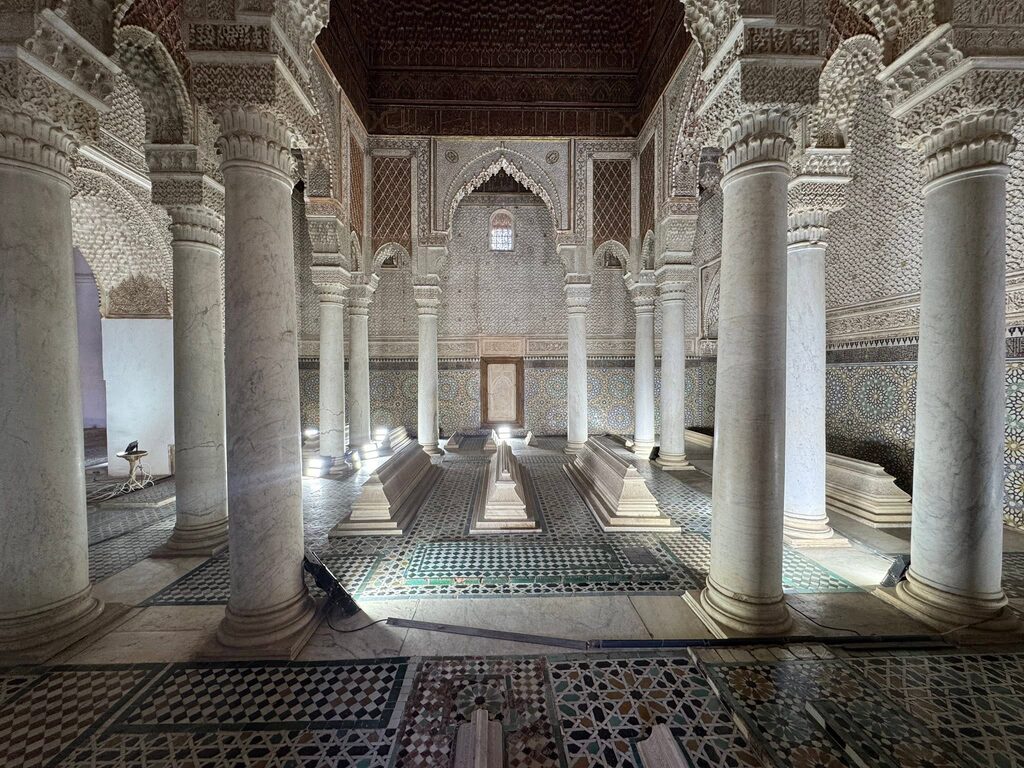
The Saadian Tombs, a royal necropolis, were built by Sultan Ahmad al-Mansur in the late 1500s, and it holds roughly sixty members of the Saadian dynasty, including al-Mansur himself. When the Alaouite dynasty took power, Sultan Moulay Ismail sealed the tombs rather than destroy them. They stayed hidden for over 250 years until French aerial photography exposed the walled-off compound in 1917.
The Chamber of the Twelve Columns is one of the reasons people throng to the site. You will find Carrara marble, gold-touched plaster, and a cedar muqarnas ceiling that took years to carve.
The site opens daily, generally from 9 AM to 5 PM. Expect to spend thirty to forty-five minutes here. It’s compact, and you view most of it through doorways.
6. Jemaa el-Fnaa

Location: Situated in the heart of the old city center, right next to the main market souks and a short walk from the Koutoubia Mosque
Access Fee: Free. You only pay for things you buy.
Jemaa el-Fnaa is the pulse of Marrakech, and it changes completely depending on the hour. Morning attracts orange juice carts and snake charmers setting up. By sunset, dozens of food stalls fire up their grills, and the square fills with musicians, storytellers, and henna artists working under string lights.
UNESCO recognized it as a Masterpiece of the Oral and Intangible Heritage of Humanity in 2001. Storytelling, music, oral traditions, and other forms of popular entertainment have been passed through this space for generations.
Don’t rush when visiting Jemaa el-Fnaa, especially at sunset. Find a spot around the square and watch the city for a while, or sit at a rooftop terrace. You learn a lot when you simply stop and observe.
You May Also Like:
25 Unusual Things to Do in Marrakech (A Tourist’s Pocket Guide)
25 Top Marrakech Hotels and Resorts Travelers Love
Top 12 Affordable Riads in Marrakech Under $100
7. Dar el Bacha (Museum of Confluences)

Location: Rue Fatima Zahra, Medina, Marrakech 40000, Morocco
Access Fee: Around 60 – 70 MAD for foreign visitors, free for Moroccan nationals on Fridays.
The powerful pasha of Marrakech, Thami El Glaoui, built this residence in the early 1900s to impress guests. It was restored and reopened as the Museum of Confluences in December 2017. Dar el Bacha now houses rotating exhibits on Morocco’s cultural influences—Amazigh, Arab, Jewish, and Saharan—all layered together.
Its architecture alone deserves attention. Expect to see a traditional Moroccan courtyard, zellige, carved wood, painted decoration, and beautifully proportioned rooms.

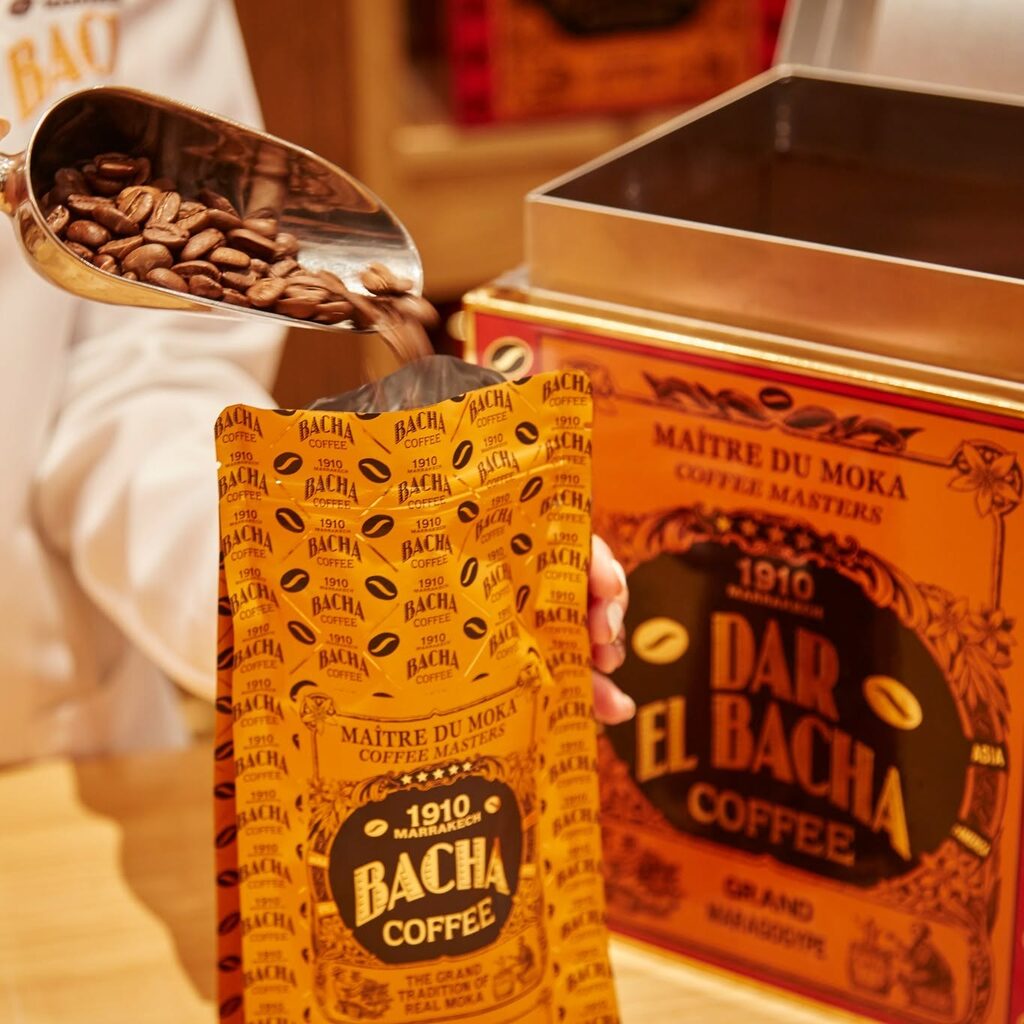
The attached Bacha Coffee shop draws its own queue, and the coffee is arguably one of the best in Morocco, with over 200 varieties of 100% Arabica coffees. Budget extra time if you want a cup after the galleries. You can also buy the coffee pack and take it home.
Dar el Bacha is open daily except on Monday, roughly 9:30 AM to 6 PM.
8. Koutoubia Mosque
Location: Avenue Mohammed V, Marrakech 40000, Morocco
Access Fee: Free
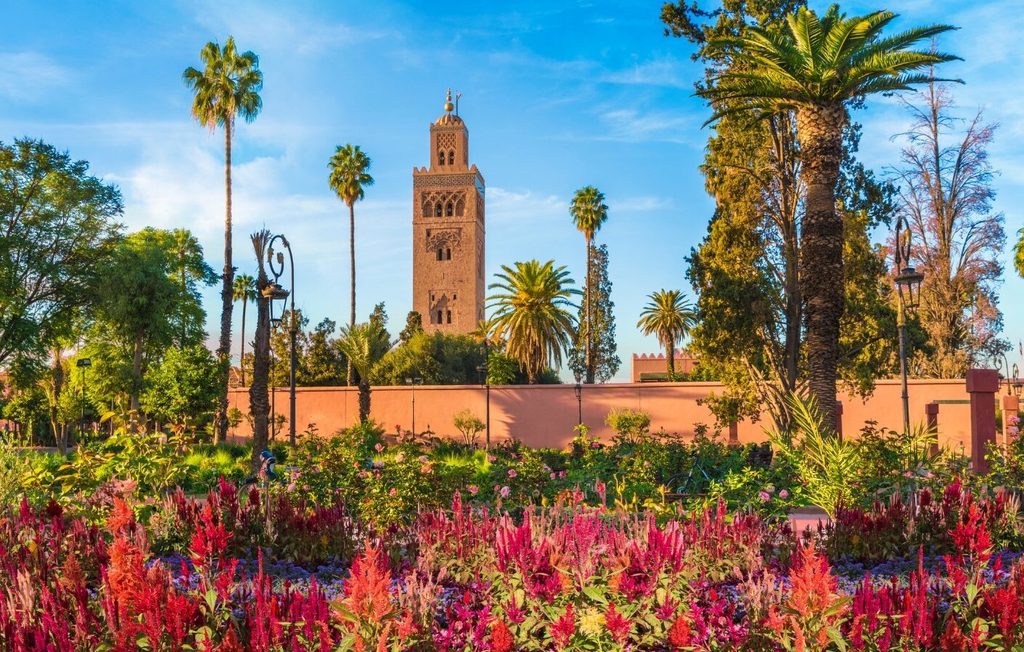
The Koutoubia minaret is the tallest structure in Marrakech, standing at 77 meters. The building is the model for the Giralda in Seville and the Hassan Tower in Rabat.
Construction began around 1147 under the Almohad caliph Abd al-Mu’min, with the current structure completed by 1158.
Non-Muslims cannot enter the prayer hall. What you can do is walk the surrounding gardens freely, and best believe, it’s absolutely beautiful. Rose bushes and orange trees frame the minaret’s carved stonework from every angle. It’s free and always open from the outside.
9. Mellah (Jewish Quarter)
Location: Southeast of the main Medina, easily reached on foot from Place des Ferblantiers
Access Fee: Free
The Mellah Jewish Quarter was established by Sultan Abdallah al-Ghalib in 1558, once home to one of Morocco’s largest Jewish communities and a center of trade, particularly in gold, silver, and sugar.
Most Jewish families left after Moroccan independence and the founding of Israel, but the neighborhood’s layout, its synagogues, and its spice market still carry that history.
The Lazama Synagogue, tucked behind an unmarked door, remains active and open to visitors. Another site worth your stop is the Miaara Jewish Cemetery, a massive site that holds whitewashed tombs of several revered rabbis and holy figures (tzadiqim), which visitors and pilgrims have traditionally visited to offer prayers.
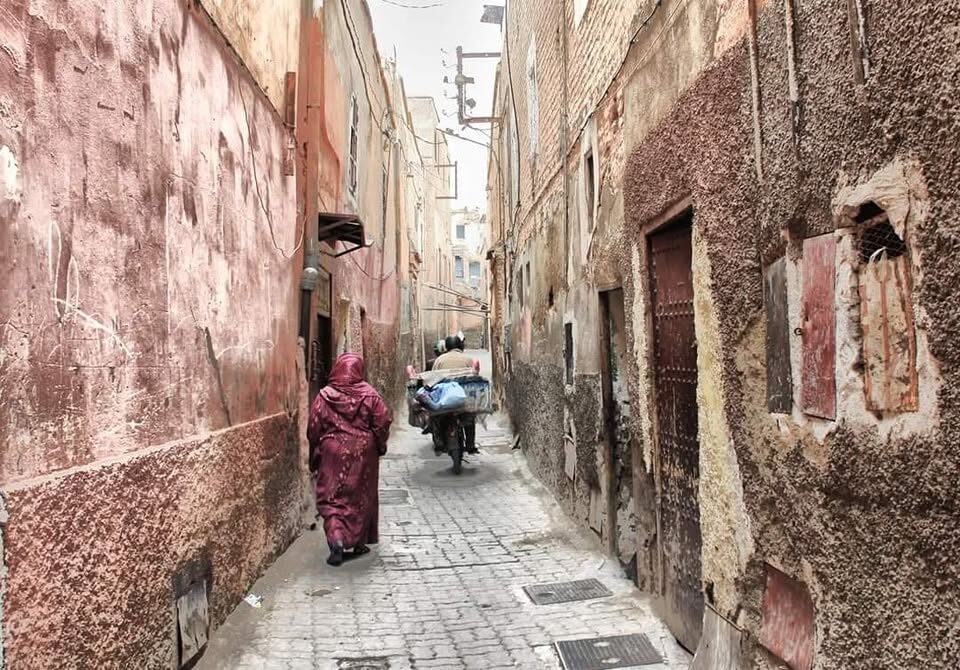
Walk the narrow streets of the Mellah slowly and soak in the environment. Balconies here look different from the rest of the medina, and that’s to tell you that this quarter grew under different rules for centuries.
10. Bab Agnaou

Location: Place de la Kasbah, Kasbah neighborhood, Marrakech, Morocco
Access Fee: Free
Bab Agnaou is the grandest of Marrakech’s old gates, built under the Almohad dynasty in the 12th century as the ceremonial entrance to the Kasbah.
The Kasbah of Marrakech was built by the Almohads in the 12th century as a fortified royal city within the city. This is where you’ll find the Royal Palace, the Saadian Tombs, and the Kasbah Mosque, all clustered inside walls that once housed the sultan’s administration and military guard.
Bab Agnaou’s decoration is more elaborate than that of many ordinary sections of the city wall.
Take some time at the horseshoe arch and the carved stonework around it. The horseshoe arch is carved with Kufic inscriptions from the Quran, and the gate was designed to impress people approaching the Kasbah.
UNESCO specifically includes Marrakech’s monumental gates and Kasbah among the historic features that contribute to the value of the Medina.
11. Bab Doukkala
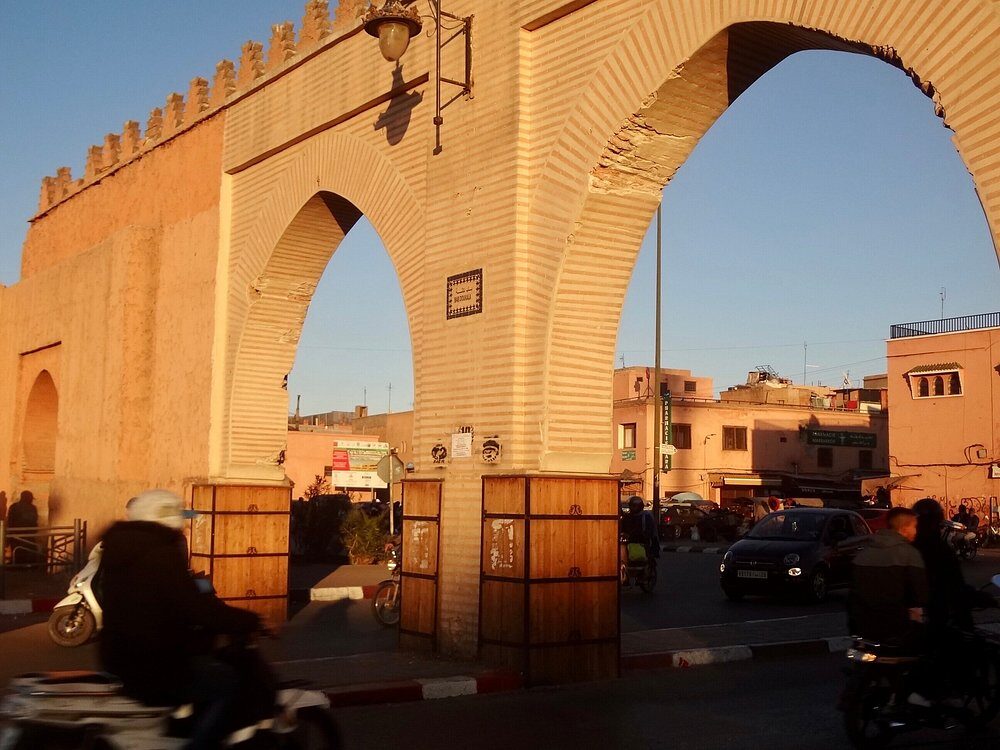
Location: Situated on the northwest side of the Medina, near the bustling Bab Doukkala Mosque and a short walk from the Dar El Bacha Museum
Access Fee: Free
Bab Doukkala is on the northwestern side of the old city. It was one of the major entrances through Marrakech’s defensive walls and connected the Medina with roads leading towards the northwest.
The gate itself is less ornate than Bab Agnaou, but its value comes from its place within the city’s old defensive system and the everyday life that continues around it.
If you’re exploring the Medina on foot, Bab Doukkala is a useful starting point for seeing a different side of old Marrakech.
12. Bab El Khemis

Location: Situated at the northeastern corner of the ancient city ramparts along Avenue Bab El Khemis
Access Fee: Free
Bab El Khemis derives its name from the Thursday market, souk el khemis, that has operated near this gate for generations.
The gate carries decorative brickwork typical of Almohad-era construction, restored over the centuries but never losing its original feel.
Locals use the souk el khemis more than tourists do. It’s the center of Marrakech’s second-hand goods market.
If you enjoy the old-city atmosphere more than polished attractions, then you will like this part of Marrakech.
13. Place des Ferblantiers
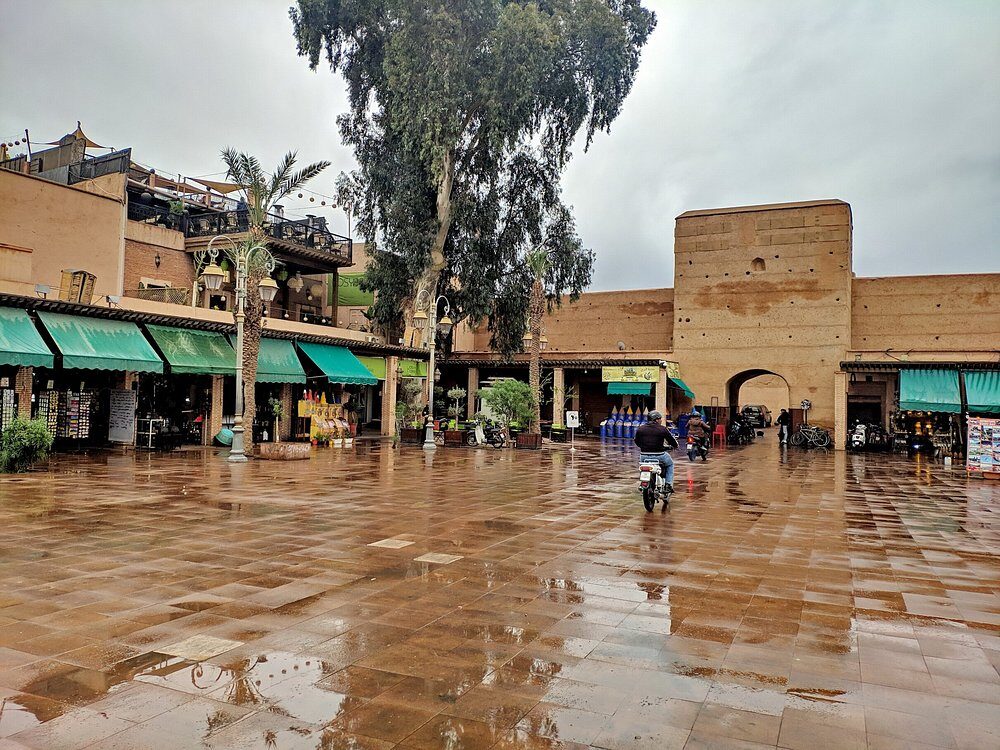
Location: Place des Ferblantiers, 40000 Marrakech, Morocco
Access Fee: Free
Place des Ferblantiers is close to the Mellah, Bahia Palace, and El Badi Palace. The name means “Square of the Tinsmiths,” a reference to the metalworkers who have traditionally worked around this part of Marrakech.
The square has a more relaxed feel than Jemaa el-Fnaa. Metalworkers, small shops, cafés, and restaurants surround the open space, while the nearby streets lead deeper into the old craft quarters.
Look up as you walk around. The square is known for its distinctive palm trees, old buildings, and traditional metalwork. You’ll also find workshops where artisans make and sell lanterns, lamps, and other decorative pieces.
Its location makes it easy to add to a southern Medina walking route. You can visit Bahia Palace, walk through the Mellah, explore Place des Ferblantiers, and continue towards El Badi Palace and the Saadian Tombs.
14. The Souks of Marrakech

The Souks of Marrakech comprise a sprawling, historical network of lively open-air marketplaces woven deeply into the northern medina of Marrakech, Morocco. They originated centuries ago as a vital trading hub for trans-Saharan camel caravans. This labyrinthine bazaar is organized loosely by trade, with distinct quarters for weavers, tanners, metalworkers, and spice merchants.

There are several souks in Marrakech, each with its own distinct name, including Souk Semmarine, Souk el Attarine, Souk des Teinturiers (Dyers’ Souk), Souk Haddadine (for industrial blacksmiths), etc. These souks spread outwards from the iconic Jemaa el-Fnaa square and serve as the beating commercial heart of the old city.
You can better understand ancient Moroccan trade traditions and find thousands of local master artisans at the Souks of Marrakech. These amazing marketplaces constitute the most famous tourist attractions in Morocco.
15. Marrakech Medina

The Medina is the old walled city itself, a UNESCO World Heritage Site since 1985, and it houses all the other attractions on this list.
Founded by the Almoravids in the 11th century, the Medina grew through successive dynasties and became the heart of Marrakech’s political, religious, and commercial life.
Its narrow streets lead to souks, mosques, riads, workshops, fountains, gates, historic residences, and public squares. The protected city area covers about 1,107 hectares.
Give yourself time here. Getting slightly lost can be part of the fun, although keeping a map on your phone is a good idea.
The Medina is the historic heart of Marrakech.
Explore the Cultural Landmarks and Historic Sites in Marrakech Without Rushing
You don’t need to visit all fifteen sites in one day. In fact, we’d strongly advise against it.
Group nearby places together.
Start around Jemaa el-Fnaa and the Koutoubia, then walk through the central Medina toward the Ben Youssef Madrasa and Almoravid Koubba. Another day can focus on the southern Medina, where you’ll find Bahia Palace, the Mellah, El Badi Palace, the Saadian Tombs, Bab Agnaou, and the Kasbah.
Wear comfortable shoes. You’re better off walking in Marrakech, but the old streets can be uneven and crowded.
Go early to the major monuments when you can. You’ll have more space to appreciate the architecture before the busiest part of the day.
And don’t make every stop about taking a photograph. Look at the doorways. Notice the tile patterns. Watch the craftsmen. Listen to the sounds around Jemaa el-Fnaa. Those little details often stay with you longer than the big attractions.
Why Marrakech Has So Many Heritage Sites
Marrakech’s architectural richness comes from the succession of dynasties that ruled the city.
The Almoravids founded Marrakech. The Almohads later reshaped it and built monuments such as the Koutoubia. The Saadians left the Saadian Tombs and El Badi Palace. Later rulers and wealthy families added palaces, residences, and religious buildings.
This is why there are so many historic sites in Marrakech.
If your time is limited, then Jemaa el-Fnaa, Koutoubia Mosque, Dar el Bacha, Bahia Palace, Ben Youssef Madrasa, Saadian Tombs, El Badi Palace, and the Kasbah should be near the top of your list.
Also Read:
Why Morocco Is the Most Visited Country in Africa
Why Millions of Tourists Visit Marrakech Every Year