



Table of Contents
Literally everyone who visits Marrakech talks about the souks, the rooftop terraces, and Jemaa el Fna Square at sunset. Granted, these spots are among the best places to visit in Marrakech, but they only show you the surface of this great city.
The Red City has layers most visitors never touch. We call them the mysterious places to visit in Marrakech. They sit behind medieval kasbahs waiting to be explored.
We’ve spent a couple of years walking these streets, and the places that stay with us are never the ones talked about the most on popular travel blogs. They’re the unpopular places: the empty cemeteries behind an unmarked wall, dungeons beneath a ruined palace, and the alleys that go nowhere until it opens into a courtyard you didn’t know existed.
If you want to see the most mysterious places to visit in Marrakech, the ones most locals keep to themselves, this list is your starting point.
The Underground Chambers of El Badi Palace

Location: Ksibet Nhass, Kasbah district, southeast Medina
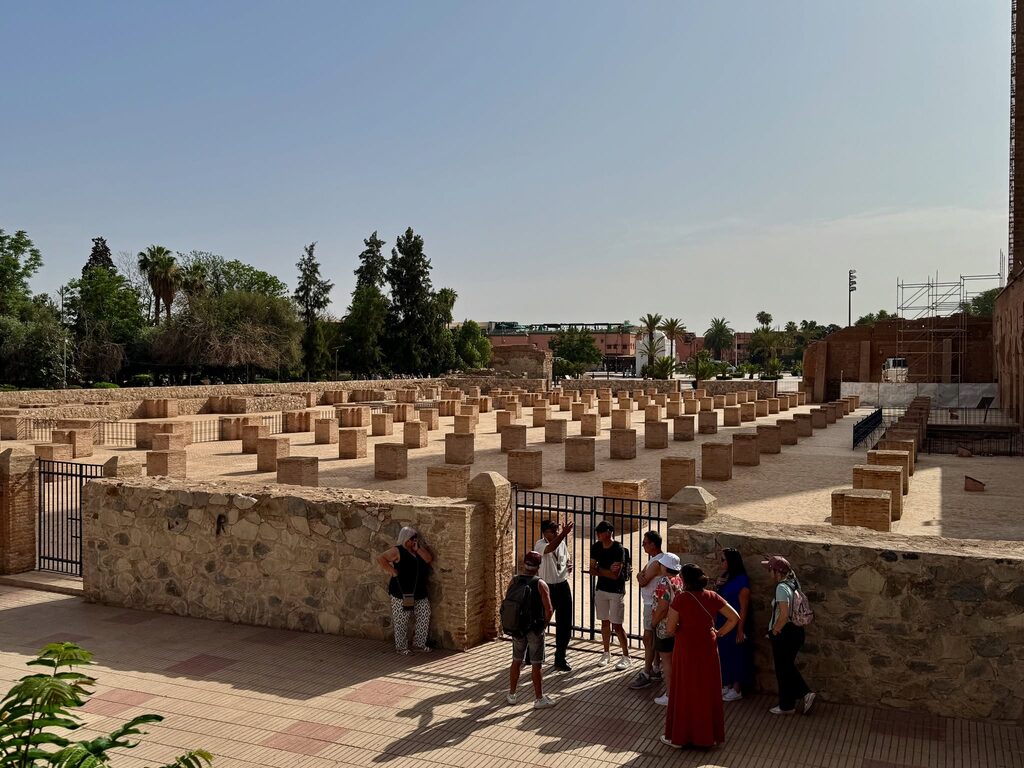
This is perhaps one of the most mysterious locations inside Marrakech itself. Built in the late 16th century, El Badi Palace was once one of the richest palaces in the Islamic world. Today, much of it lies in ruins, but beneath the courtyards are underground corridors, vaulted storage rooms, and hidden passageways.
Tucked into a corner of the complex, a narrow staircase drops into the underground chambers that once served as dungeons and storerooms for Sultan Ahmad al-Mansur’s court.
Many local guides tell stories of hidden treasures in these underground chambers. There are secret escape tunnels, concealed royal prisons, and underground routes connecting different parts of the Kasbah.
The Seven Saints Pilgrimage
Location: Shrines scattered across the old Medina, with a monument near Bab Doukkala
Marrakech carries a nickname most visitors never hear: the city of Sabatou Rijal, or the Seven Men. Sultan Moulay Ismail formalized a pilgrimage in the 17th century, guiding worshippers to the tombs of seven revered scholars and mystics buried around the city. The mausoleum of Sidi Bel Abbes, the city’s patron protector, is the most prominent and venerated stop on the pilgrimage route.
These sites are among the most intriguing places of interest in Marrakech for religious tourists.
If you have the time, you can explore all seven spiritual routes connecting the tombs of the seven revered scholars and saints. Many Moroccans believe completing the pilgrimage brings blessings, protection, and answered prayers.
You won’t get inside most of these shrines unless you’re Muslim, but the neighborhoods around them tell their own stories.
The Forgotten Jewish Cemetery (Miaara Cemetery)

Location: Rue El Miaara, Mellah district, east of El Badi Palace
Miaara Jewish Cemetery is hidden inside the Mellah, Morocco’s oldest Jewish quarter, established in 1558 under the Saadian dynasty. The Miaara Cemetery dates back to the 16th century, and it holds thousands of whitewashed tombstones stretching across open ground.
Stories abound of famous rabbis buried here whose graves continue attracting pilgrims seeking miracles.
Sections divide the cemetery by gender, following Jewish burial tradition, and graves belonging to Kohanim (Jewish priests) carry blue paint for spiritual protection. The Mellah was once the beating heart of Marrakech’s Jewish community.
The Secret Riads Hidden Behind Blank Walls

Location: Throughout the Medina, concentrated in Mouassine and the Kasbah
Marrakech hides its beauty on purpose. Walk down any street in the old city, and you’ll pass dozens of doors set into flat, windowless walls. Nothing on the outside hints at what’s behind them.
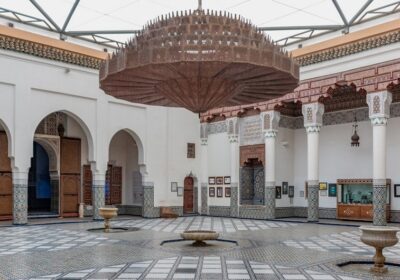
Push one open, or get invited in by an owner, and you’ll find a courtyard built around a fountain, tiled floors, carved cedar ceilings, and rooms arranged in total privacy from the street. This design goes back centuries. Wealthy families built inward, keeping their homes hidden from view as both a security measure and a mark of modesty.
Riads are surely some of the most interesting places to visit in Marrakech.
Some of these riads now operate as guesthouses, and staying in one gives you a small taste of what the wall conceals. Others remain private family homes, closed to outsiders entirely. Either way, you’re walking past hidden architecture every time you cross the Medina, whether you notice it or not.
You May Also Like:
15 Must-Visit Cultural Landmarks and Historic Sites in Marrakech
Top 11 Museums in Marrakech You Have to Visit
The Mellah’s Hidden Alleys
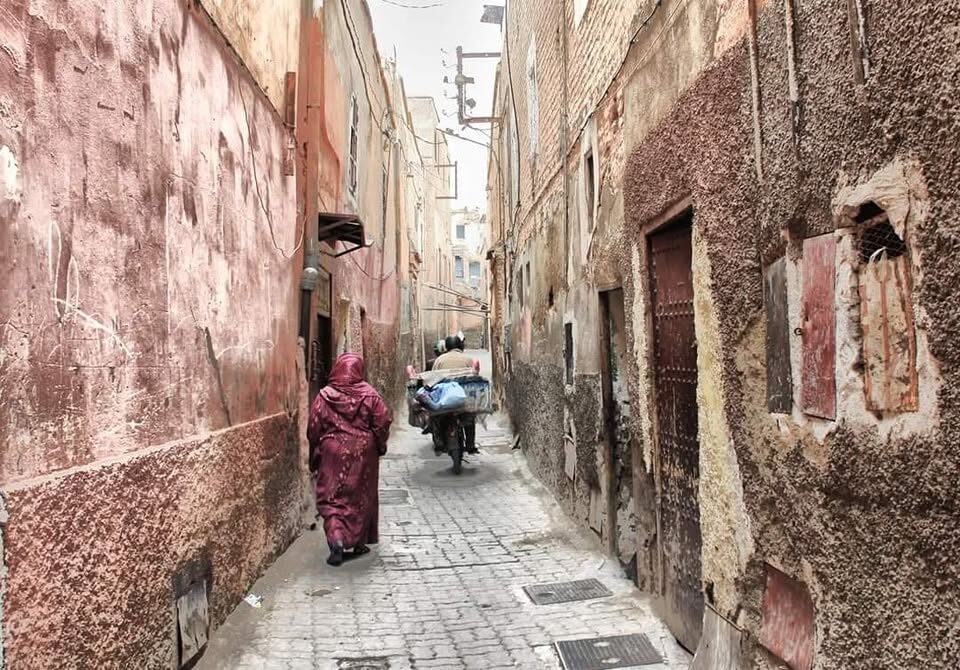
Location: Southeast of Jemaa el Fna, near Place des Ferblantiers
The Mellah is Marrakech’s Jewish quarter, established in 1558 under Sultan Abdallah al-Ghalib. Its streets are narrower and quieter than the main souks, and most tourists skip this mesmerizing experience.
Slow down here and explore the alleys. Mind you, they twist without warning, opening into small squares with spice stalls or a tucked-away synagogue door. The Lazama Synagogue, built around a blue and white tiled courtyard, still holds services for the small Jewish community that remains in the city.
Get a little lost on purpose. That’s the only way to find the details that make the Mellah worth the visit. Feed your eyes to a faded Hebrew inscription above a doorway, a courtyard with laundry strung overhead, and a baker pulling bread from an oven. Visit the spice market at the district’s edge, sometimes called the Mellah souk.
The alleyways can be quiet and eerie, and locals tell stories of merchants, secret gatherings, and families who once lived there before emigrating.
The Agafay Desert’s “Mirage Landscape”
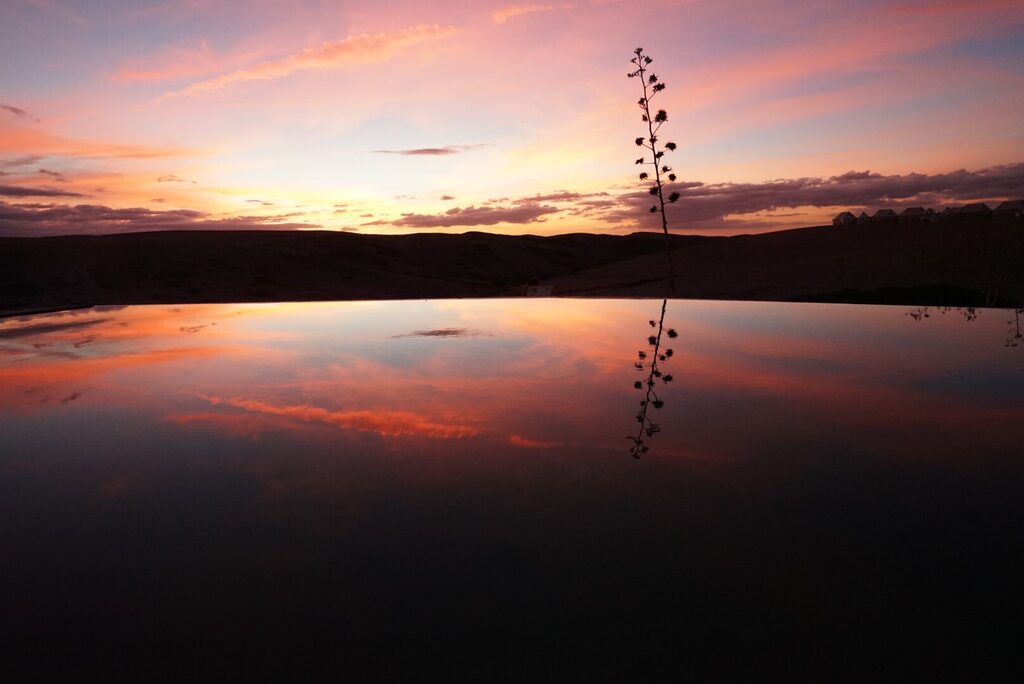
Location: About 30 kilometers southwest of Marrakech, near the Atlas foothills
Most people picture golden sand dunes when they think of a Moroccan desert trip. However, Agafay gives you something stranger. This is a rocky, lunar stretch of land, with dry riverbeds and stone formations that stretch towards the Atlas Mountains in the distance.
Heat rising off the ground can distort your vision, bending the horizon until distant hills seem to float. Also, lakes tend to disappear as you inch closer. These are optical effects caused by atmospheric refraction, but they create an almost surreal experience.
From the medina, it’s close enough for a half-day trip, which makes it one of the easiest mysterious places in Marrakech to reach without committing to a multi-day desert excursion.
Camel treks and sunset dinners draw most of the visitors who make it out here.
The Legend of the Koutoubia Minaret

Location: Koutoubia Mosque, southwest of Jemaa el Fna Square
Every visitor sees the Koutoubia Minaret. It dominates the skyline, and city planning rules keep any building in Marrakech from rising taller. Few visitors hear the stories that surround it.
One legend claims the minaret’s builders made a mistake in its foundation, and instead of correcting it, they built around it, leaving a slight tilt only the trained eye can spot. Another story ties the tower to a set of gilded copper globes fixed at its peak, said to have been funded by a sultan’s wife as penance for eating or drinking during Ramadan. The exact origin of these stories has been watered down by centuries of retelling.
The mosque itself—the largest in Marrakech—is closed to non-Muslims, so you won’t get past the gardens surrounding it. Stand at the edge of those gardens at night, when the minaret is lit against the dark sky, to get some of the nicest shots of the mosque at sunset.
The Abandoned Caravanserais (Foundouks)

Location: Scattered through the souks, particularly around Mouassine and Kessabine
Long before hotels existed, traveling merchants needed somewhere to rest and store their goods. Foundouks, Morocco’s version of a caravanserai, filled that role. These structures gave traders a courtyard for their animals, storage on the ground floor, and lodging above.
Marrakech still has dozens scattered through its souks, though most are abandoned or repurposed now. Some function as artisan workshops. Others stand empty, their wooden balconies sagging and their courtyards silent except for pigeons.
Think of merchants from Timbuktu, gold caravans, spice traders, and camel trains. Several still contain hidden workshops rarely visited by tourists. Peek through an open foundouk door, and you’re looking at the original infrastructure of the trans-Saharan trade routes that built this city’s wealth. Some locals are good enough to show you around. Local tour guides are your best bet.
The Palm Groves of La Palmeraie at Dawn
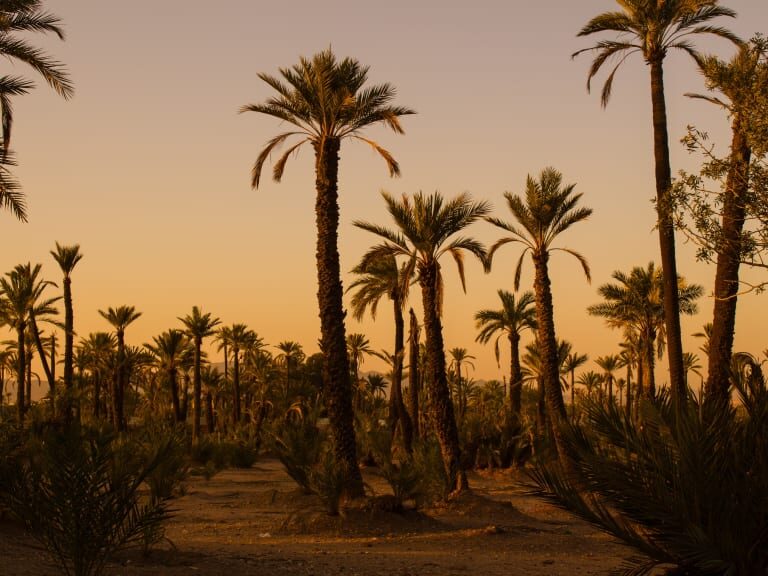
Location: Northeast of Marrakech, along the Route de Casablanca
La Palmeraie stretches across thousands of hectares northeast of the city, a palm oasis some accounts trace back to the Almoravid rule in the 11th century. Villas and golf resorts have taken over some parts of it over recent decades, largely due to the groves, which are a lovely sight to behold.
Locals have long shared stories about spirits (known in Moroccan folklore as jinn) inhabiting remote palm groves after dark. These are just traditional beliefs, but they contribute to the area’s mystique.
Local guides sometimes offer sunrise camel or horse rides through the groves, and it’s definitely worth booking.
Read: 10 Adventure Activities to Do in Palmeraie Marrakech Travelers Love
The Whispering Souks at Night

Location: The souk quarter north of Jemaa el Fna
During the day, the Medina is vibrant and crowded. But at night, after most shops close, the narrow alleyways turn eerie and quiet. It’s almost as if you can hear echoing footsteps along dim lantern-lit passages. Cats slip between doorways, and wooden shutters creak in the breeze.
While there is nothing supernatural about the experience, walking through the nearly empty souks at night offers a striking contrast to your experience during the day.
Please note that this experience isn’t for everyone. You should stick to the main lanes with a local guide if you’re not confident exploring after dark.
Add three or four of these mysterious places to visit in Marrakech to your next trip, and you’ll walk away with a version of the city most visitors never see.
Also Read:
25 Unusual Things to Do in Marrakech (A Tourist’s Pocket Guide)
25 Top Marrakech Hotels and Resorts Travelers Love
Top 12 Affordable Riads in Marrakech Under $100