


The museums in Marrakech are some of the finest in North Africa. This city is full of history, and its museums are a delight—breathtaking buildings, amazing collections, and friendly guides.
Marrakech’s museums reveal the city through very different lenses. There is contemporary African art, haute couture, Amazigh jewelry and textiles, and old photographs. The traditional Moroccan architecture is almost as much a part of the experience as the collections themselves.
If you’re an art or history buff, this guide covers the top eleven museums in Marrakech, Morocco, that you should definitely add to your Marrakech itinerary.
1. MACAAL, Museum of African Contemporary Art Al Maaden

Location: Sidi Youssef Ben Ali, Marrakech, Morocco. The best way to get there is by a 15–20 minute taxi ride from central Marrakech
Access Fee: 40 MAD (approx. €4) for tourists. Moroccan residents pay 20 MAD with valid proof of residency or nationality.
The Museum of African Contemporary Art Al Maaden was opened in 2016 and reopened in 2025 after a major refurbishment. Its collection contains more than 2,000 works spanning painting, sculpture, photography, installations, and digital art.
MACAAL is a working, contemporary space built by a family, Alami and Othman Lazraq, who spent forty years collecting African art before deciding to share it.
Its current centerpiece exhibition, “Seven Contours, One Collection,” walks you through seven themed rooms and more than 150 pieces spanning the early twentieth century to today. Expect painting, sculpture, textiles, and photography from across the continent, not just Morocco.

The building spreads across two floors and includes a library stocked with books on African art and design. Stop at the café afterwards. In winter, you’ll catch views of the Atlas Mountains from the garden.
It’s open Wednesday through Sunday, 10am to 6pm, closed Monday and Tuesday.
2. Yves Saint Laurent Museum Marrakech

Yves Saint Laurent Museum (Musée Yves Saint Laurent Marrakech) was opened in 2017 near the Jardin Majorelle. Its building was designed by Studio KO, with a façade made from brick arranged in a lace-like pattern. The result feels genuinely Marrakech.
Fashion is the main attraction inside.

The museum’s Yves Saint Laurent exhibition draws from the designer’s extensive archive and includes garments, drawings, photographs, films, and other materials showing how his ideas developed. The collection includes famous designs such as the Mondrian dress, the pea coat, the safari jacket, and Le Smoking.
Yves Saint Laurent discovered Marrakech in 1966, on a trip with his partner Pierre Bergé. They eventually bought the Jardin Majorelle and helped save it from development. Years later, Marrakech has become home to a museum dedicated to Saint Laurent’s work.
Getting past the fountain courtyard, you’ll see a 400-square-meter permanent exhibition hall holding rotating selections from more than 5,000 garments and thousands of accessories and sketches.
Plan for an hour or more here. Most visitors finish the exhibition and stay a little longer for the short film on Saint Laurent’s life that closes the tour.
There is an on-site restaurant, Le Studio Café, beside a long reflecting pool lined with zellige tile. It’s a genuinely peaceful spot to sit once you’re done.
The museum is open daily except Wednesday, 10am to 6:30pm, with last entry at 6pm. It’s in the same facility as Jardin Majorelle. Book online in advance.
3. Dar Si Said Museum

Location: The Dar Si Said Museum is located at 8 Rue de la Bahia in the historic Medina of Marrakech, Morocco, just a short walk from the Bahia Palace.
Access Fee: The standard admission fee is 70 dirhams (approx. $7 USD)
Dar Si Said is a spectacle.
The palace was built during the second half of the 19th century for Si Saïd Ben Moussa, who served as a minister of war, and the brother of the man who built Bahia Palace. The building later became a museum, and its architecture remains one of its biggest attractions.
The museum is now officially known as the National Museum of Weaving and Carpets Dar Si Saïd.
The collection focuses on traditional Moroccan craft: carved cedar ceilings, wrought jewelry, ceramics, leather goods, and one of the country’s finest carpet collections outside a museum dedicated solely to textiles.

When you get inside, look up. The stucco panels and carved wood ceilings are themselves museum pieces, carrying centuries of the same artisanal knowledge the objects below were made to preserve.
It is open from 10am to 6pm, closed on Tuesdays. Early afternoon tends to be quieter than the morning.
Please note: The Dar Si Said Museum in Marrakech is temporarily closed for restoration purposes. Check the current status before going there.
4. Musée de Marrakech (Marrakech Museum)

Location: Place Ben Youssef, Marrakech 40000 (situated right next to the Ben Youssef Madrasa)
Access Fee: General admission is about 80 MAD ($8 USD)
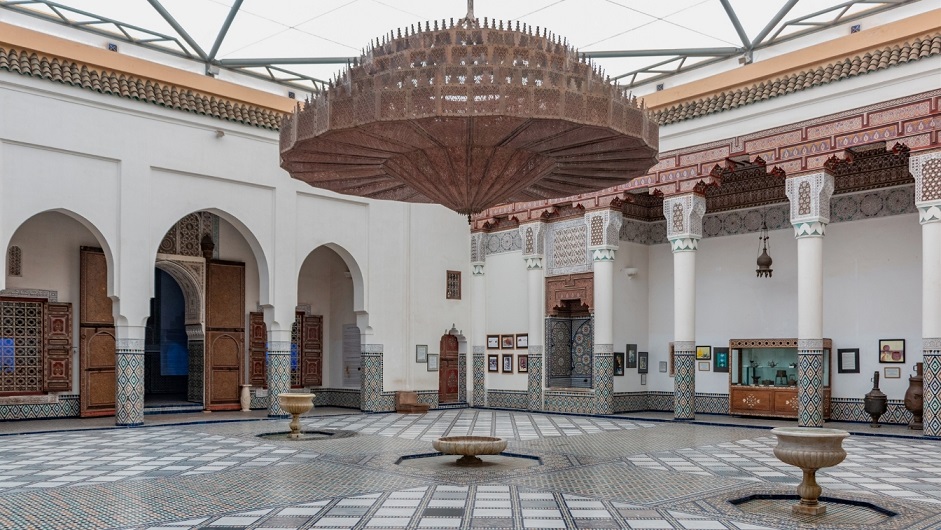
Upon entering Musée de Marrakech, the first thing that catches your eye is the scale of the central courtyard.
It’s massive!
A huge chandelier hangs above it, and the surrounding architecture gives you a very clear idea of the craftsmanship that went into Moroccan palaces.
The palace dates to the late 19th century and follows the Hispano-Moorish architectural tradition. Today, the museum displays Moroccan art, archaeological objects, and ethnographic material.
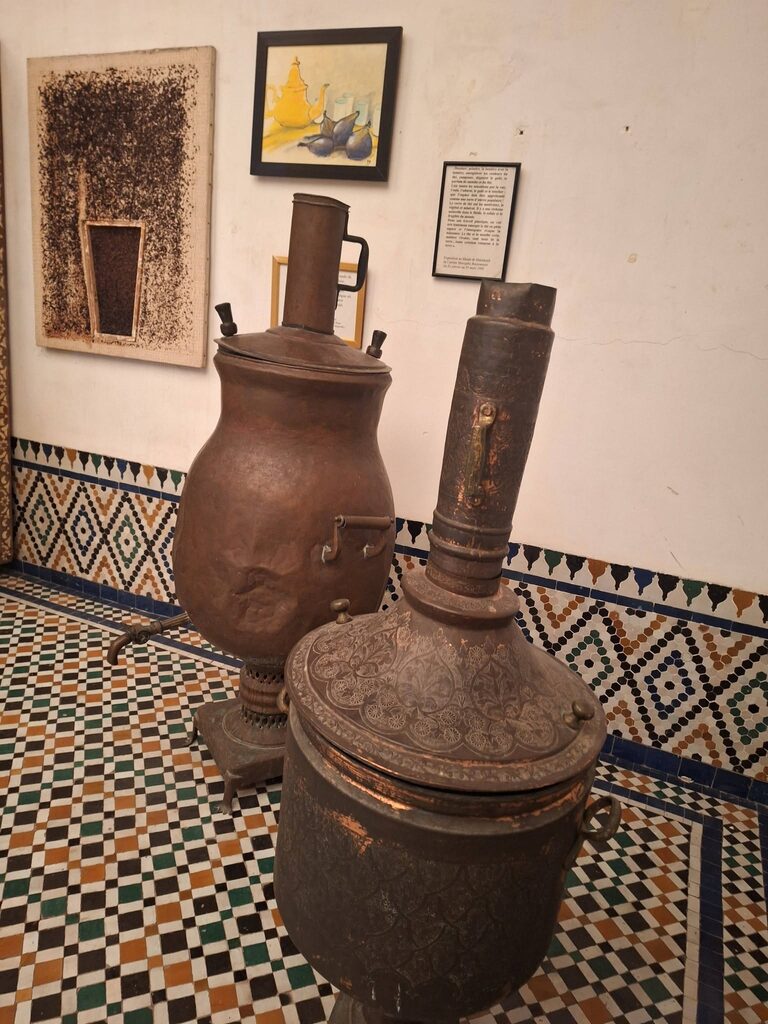
Musée de Marrakech is open daily, generally from 9am to 6pm (extended to 7pm April through September in some listings).
5. Dar El Bacha Museum (Musée des Confluences)

Location: Rue Fatima Zahra, Dar el Bacha, Medina, Marrakech 40000, Morocco
Access Fee: Foreign Adult Ticket: 60 MAD. Children / Under 18: 10 to 15 MAD.
Dar El Bacha, now officially the Musée des Confluences, was built in the early 20th century for Thami El Glaoui, the Pasha of Marrakech during the French colonial period. El Glaoui was famous for extravagance. He hosted Winston Churchill and Charlie Chaplin here, and the palace still carries that weight.
In this museum, you’ll find a “confluence” of cultures, with rotating exhibitions of contemporary, traditional, and historical art from Morocco and across Africa, displayed inside rooms with carved wood ceilings, hand-laid zellige tile, and courtyards shaded by citrus trees.
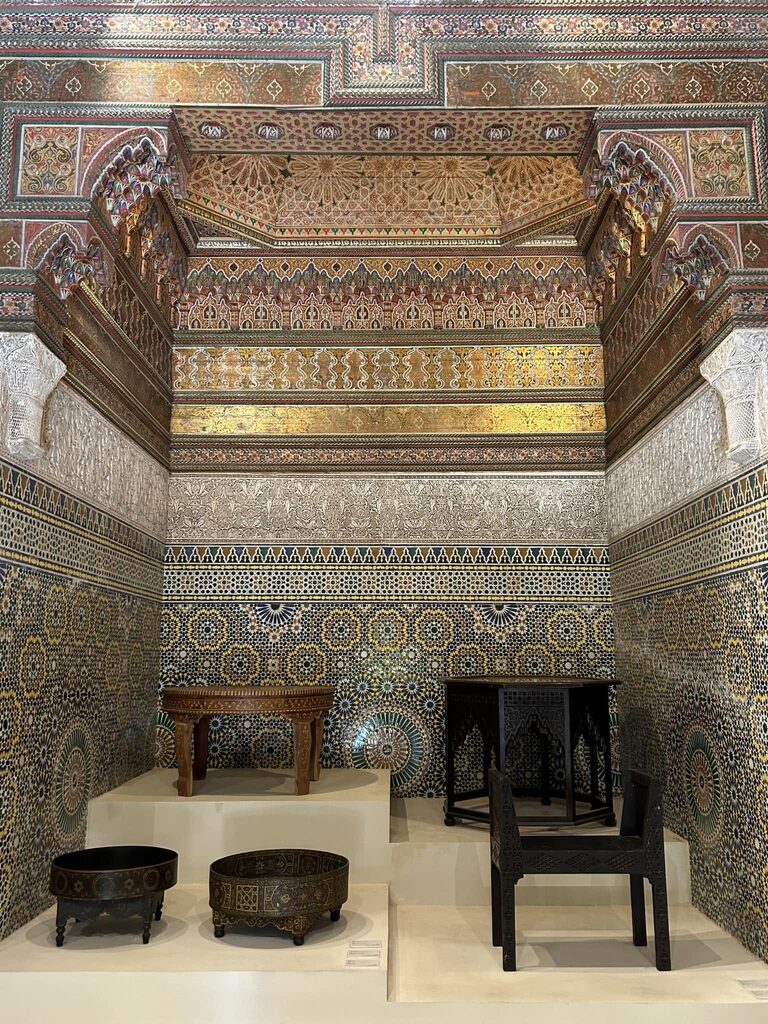
A short video near the entrance shows artisans creating the mosaic work by hand, and it hits differently once you’ve seen how they’re made.
The building also houses Bacha Coffee, a beautiful, colonnaded café serving coffee from dozens of countries.
Warning: The wait for a table can run one to three hours during peak times, and a ticket to the museum does not guarantee you a seat. If you want the coffee experience, sign up for the waitlist the moment you arrive, then explore the museum while you wait.
Musée des Confluences is open roughly 9:3 AM to 6 PM, closed Tuesday.
6. Pierre Bergé Museum of Berber Arts

Location: Inside the Jardin Majorelle on Rue Yves Saint Laurent in the Guéliz district of Marrakech.
Access Fee: Admission costs 230 DH (approx. €21) combined with the garden entry.
Pierre Bergé Museum of Berber Arts is inside Jardin Majorelle, in what used to be Jacques Majorelle’s own painting studio. Pierre Bergé and Yves Saint Laurent spent decades traveling from the Rif Mountains to the Sahara collecting Berber (Amazigh) objects, and in 2011, under royal patronage, they opened this collection to the public.
More than 600 pieces fill the space: jewelry, textiles, weapons, doors, and ceremonial objects of North African heritage. The museum is comparatively small, so give it 30 to 45 minutes, but it’s packed.
You’ll almost always visit this museum as part of a combined ticket with Jardin Majorelle and, often, the YSL Museum, since all three are within the same compound and are booked through one official site.
The museum operates daily, roughly 9 AM to 5:30 PM. No photography is allowed inside.
You May Also Like:
10 Instagrammable Places in Marrakech You Should Never Miss
15 Must-Visit Cultural Landmarks and Historic Sites in Marrakech
7. Maison de la Photographie
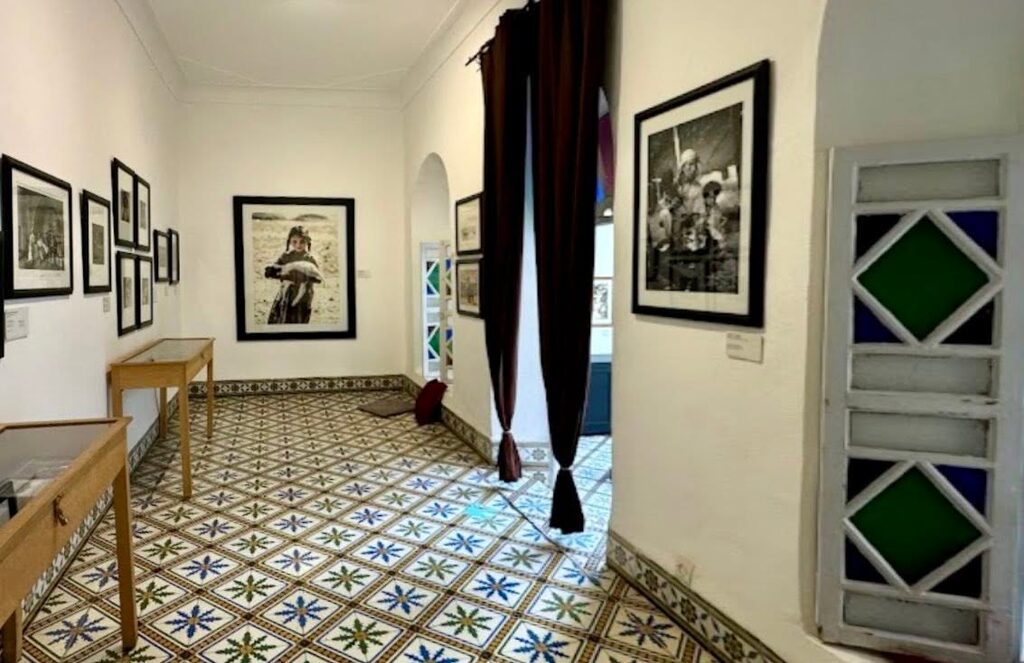
Location: Rue Ahl Fes, 46 Rue Bin Lafnadek, Marrakech 40030, Morocco. It is about a 15-minute walk north from Place Jemaa el-Fna and just a 5-minute walk from the Ben Youssef Madrasa
Access Fee: Admission costs 40 to 60 MAD for adults, free for visitors under 15 or 16 depending on the season. Tickets are valid for return visits the same day, so you can step out for lunch and still come back.
Two collectors, Patrick Manac’h and Hamid Mergani, opened this museum in a restored riad in 2009, and it has quietly become one of the best-loved small museums in the medina.
The museum feels like a time capsule and houses more than 8,000 original photographs, glass plates, and postcards documenting Morocco between 1870 and 1950, alongside contemporary work by Moroccan photographers.

What you get here is a visual record of a Marrakech that no longer exists: souks before electricity, Berber families in the Atlas Mountains, colonial-era street scenes shot by outsiders trying to capture a place they didn’t fully understand.
Climb to the rooftop terrace when you’re done. It’s one of the best unofficial viewpoints in the medina, and the attached café serves mint tea with a panorama of rooftops stretching towards the Koutoubia minaret. Go at golden hour if your schedule allows it.
The museum is open daily, roughly 9:30 AM to 7 PM.
8. Women’s Museum of Marrakech (Musée de la Femme)
Location: 19 Rue Sidi Abdel Aziz in the Sidi Abdel Aziz neighborhood of the Medina. The best way to get there is by walking through the Medina (near the Ben Youssef Madrasa)
Access Fee: The entrance fee is 30 MAD (about €3 or $3 USD)
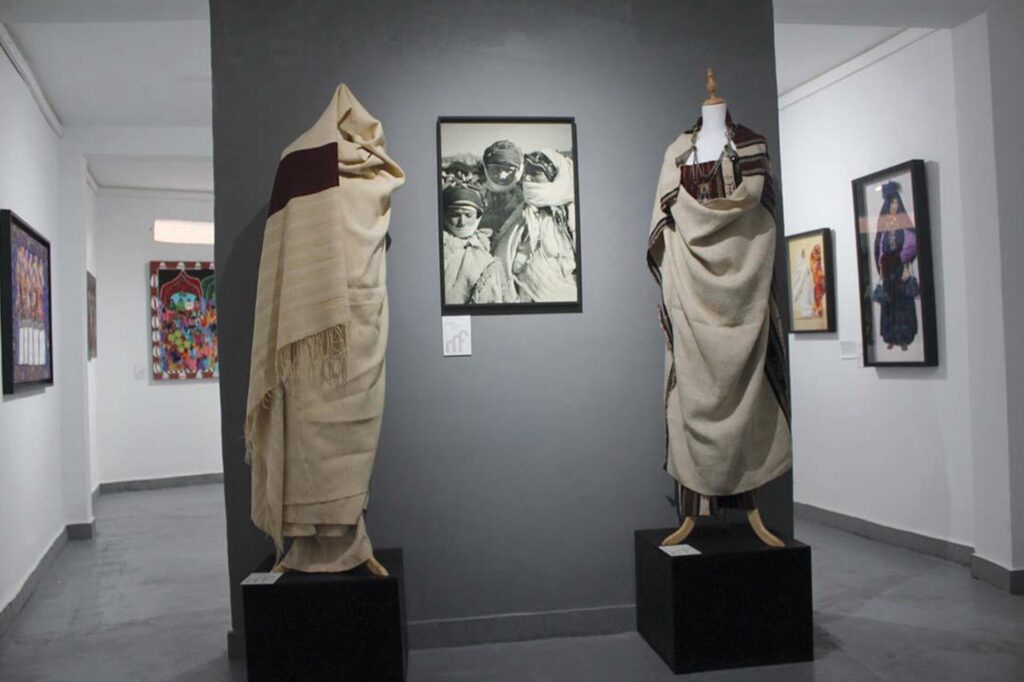
This is the smallest museum on this list. The Women’s Museum of Marrakech is near Ben Youssef Madrasa. It tells the story of Moroccan women through photography, objects, and art.
The museum focuses on women artists, activists, and public figures who shaped Morocco but rarely appear in the country’s official histories. One exhibition dedicated to artist and activist Hafida Zizi is actually very compelling. The museum is small enough to see in thirty minutes, but plan for longer if you want to actually read each panel.
There’s a small rooftop terrace worth a look before you leave.
Hours vary by season, so confirm before you go.
9. Museum of Mouassine
Location: 4, 5 Derb El Hammam, Rue Mouassine in the heart of the Medina of Marrakesh, Morocco.
Access Fee: Around 40 MAD for self-exploration; up to 100 MAD if bundled with evening live music and mint tea.
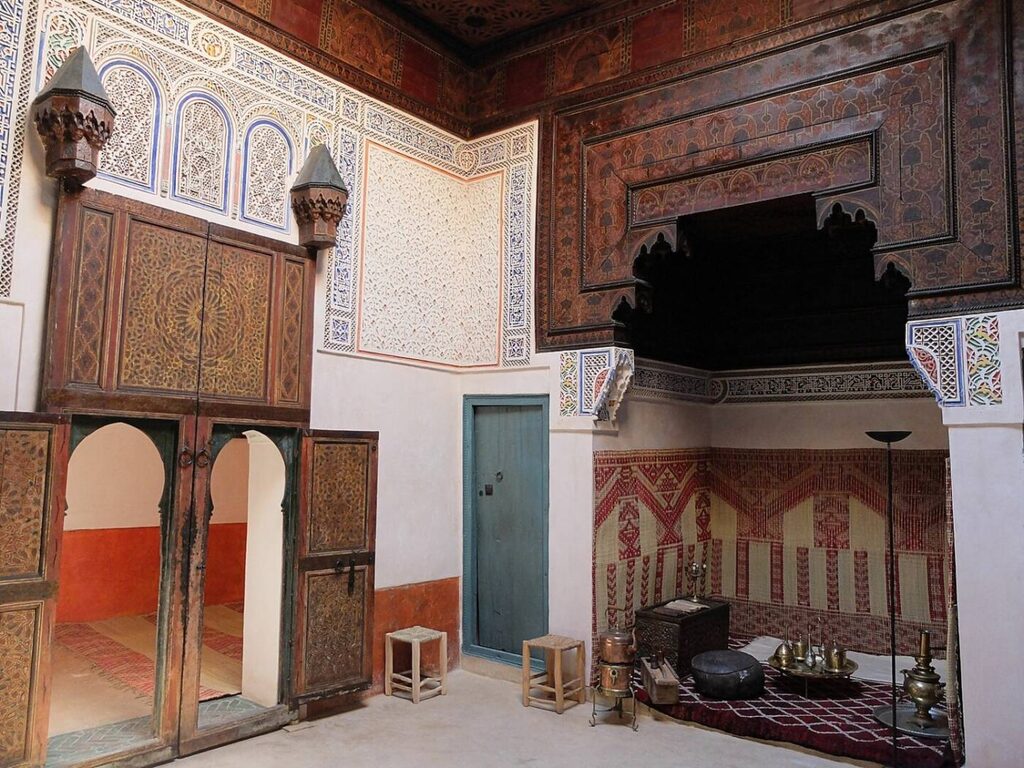
The Museum of Mouassine is inside a restored 16th- and 17th-century house in the Mouassine district, part of a larger complex that includes a mosque, a madrasa, a hammam, and Marrakech’s oldest surviving fountain.
The house itself includes a douiria, an upper-floor apartment historically reserved for private family life, now opened to visitors as part of the museum tour.
Inside, you will find traditional instruments alongside displays on daily life in the medina centuries ago, and the museum runs live concert evenings, typically Monday, Wednesday, and Friday from 6pm to 7pm, where you can hear the instruments played rather than just looking at them behind glass.
10. Boucharouite Museum (Musée Boucharouite)

Location: 107 Derb el Cadi, Azbezt, Marrakech 40000, Morocco.
Access Fee: 40 Moroccan Dirhams (MAD) for adults, and free for children under 16 years old.
The Boucharouite Museum is a beautiful hidden gem located inside a restored traditional Moroccan house, known as a riad. This private museum celebrates the amazing creativity of Berber women from the High Atlas Mountains.
It focuses on colorful “boucharouite” or rag rugs. The weavers make these unique textiles by recycling scraps of old clothing and plastic grain sacks.
You can walk around and check their pieces and antique collections.
11. Orientalist Museum of Marrakech
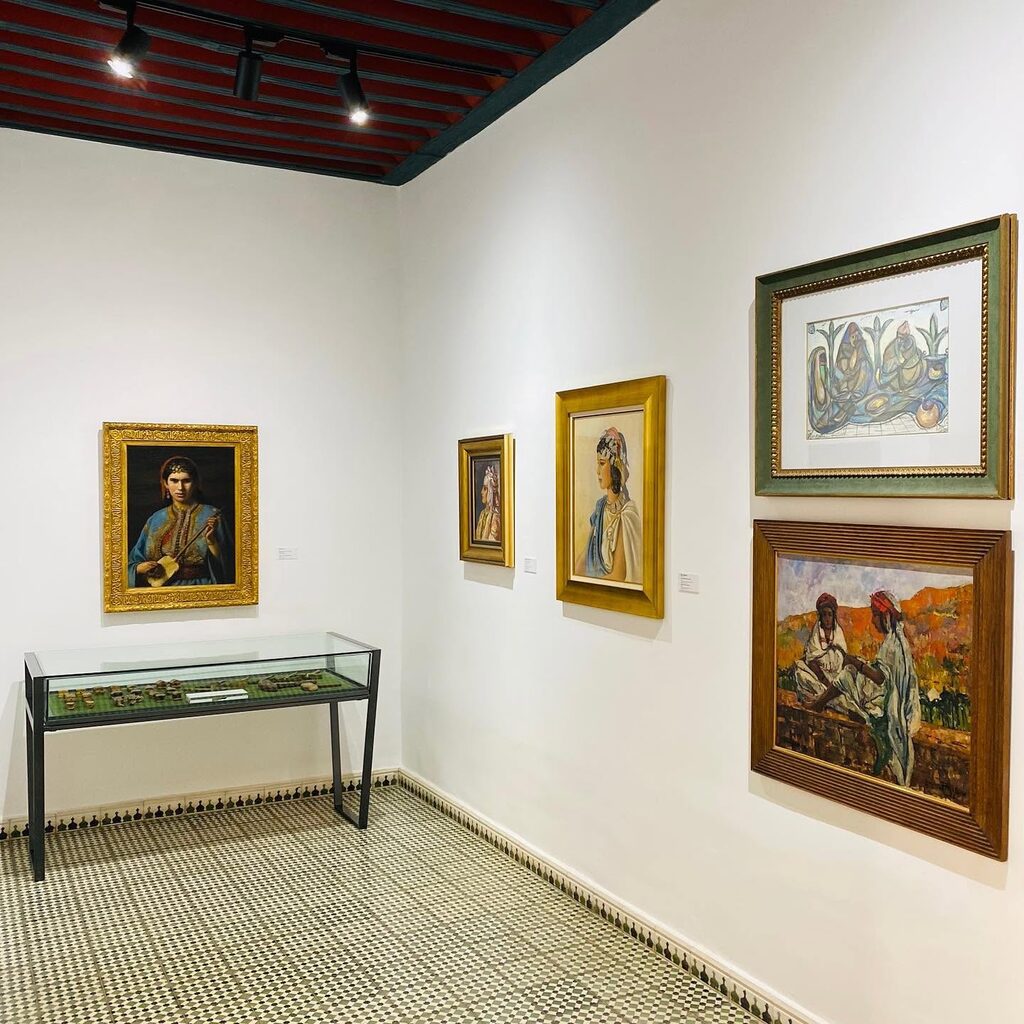
Location: Rue Kaat Benahid, N° 5 Derb El Khamsi, Marrakech 40000, Morocco
Access Fee: 6 Euros (approximately 65 Moroccan Dirhams).
The Orientalist Museum of Marrakech is a beautiful art gallery tucked inside a restored 17th-century Saadian riad. The museum focuses on “Orientalist art,” which refers to works by European travelers who were fascinated by North Africa.
You can look at a remarkable collection of paintings by famous artists like Eugène Delacroix, Jacques Majorelle, and Salvador Dalí.
After exploring the galleries, you can walk up to the lovely rooftop terrace. It features a quiet cafe where you can enjoy panoramic views of the city rooftops and the Atlas Mountains.
Which museums in Marrakech should you visit first?
If this is your first trip, don’t try to visit every museum in one day. Start with Yves Saint Laurent Museum and the Pierre Bergé Museum of Berber Arts if fashion, lifestyle, and Amazigh culture interest you.
Explore MACAAL if you want to see diverse African art from across the continent and something very different from the traditional medina experience.
The Musée de Marrakech is a good choice for first-time visitors because its location makes it easy to combine with other attractions around Ben Youssef.
Possibly, plan your itinerary around all eleven Marrakech museums. It’s an experience that will stay with you.
Also Read:
Why Morocco Is the Most Visited Country in Africa
Why Millions of Tourists Visit Marrakech Every Year
25 Unusual Things to Do in Marrakech (A Tourist’s Pocket Guide)
25 Top Marrakech Hotels and Resorts Travelers Love
Top 12 Affordable Riads in Marrakech Under $100


